Why Growth Requires Better Processes
Adi Klevit shares how systems, SOPs, and AI help businesses grow faster. Practical leadership insights on Measure Success Podcast.

Words by
Carl J. Cox
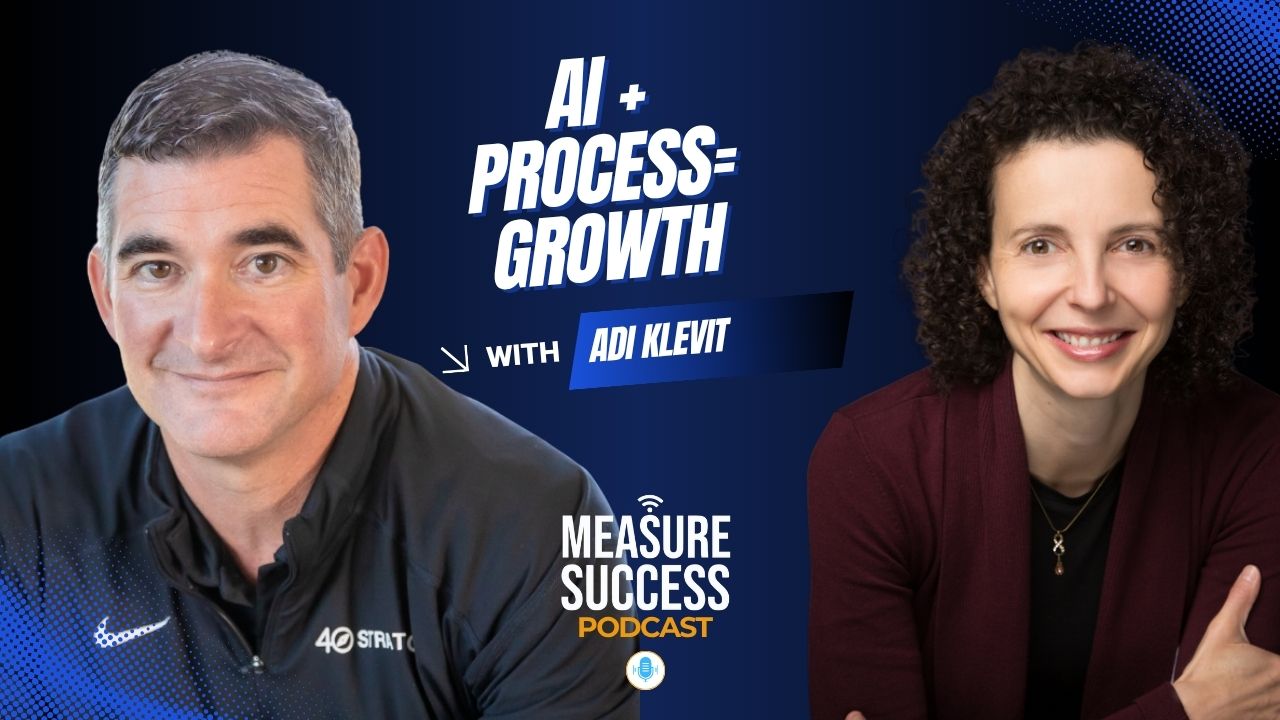
Many businesses do not fail because they lack effort. They struggle because growth creates chaos. More customers, more employees, more decisions, and more moving parts can overwhelm a company that does not have strong systems. In this episode of the Measure Success Podcast, Carl J Cox sits down with Adi Klevit to discuss how leaders can create better operations, use AI wisely, and build a company that scales. Adi is the founder of Business Success Consulting Group. She helps organizations improve workflows, document processes, strengthen hiring, and create operational clarity.
Why Systems Matter
Many business owners build companies through hustle, talent, and determination. That can work early.
But as a company grows, memory and improvisation stop working.
Adi, Business Success Consulting Group, ays, ithout systems, businesses face:
Missed tasks
Hiring mistakes
Poor communication
Inconsistent customer experience
Slow onboarding
Wasteful meetings
Leader burnout
Systems create repeatable success. They help teams know what good work looks like and how to deliver it.
What Strong SOPs Really Do
Standard Operating Procedures, often called SOPs, are more than written instructions.
Adi explained that many owners think documentation only matters if someone leaves the company. While that matters, the real value is seeing the current process clearly so it can improve.
When companies document workflows, they can ask:
Why do we do it this way?
What steps are unnecessary?
Where are delays happening?
Who owns each task?
What can be automated?
That is where efficiency starts.
AI Is a Tool, Not a Leader
AI was a major topic in this conversation. Adi shared how her company uses AI internally for meeting notes, proposals, agendas, hiring support, content creation, and process evaluation.
But she also made something clear: AI should not replace human judgment.
That matters because AI can generate answers fast, but fast answers are not always wise answers. Leaders still need discernment, context, and accountability.
Strong companies use AI to support decision-making, not to outsource thinking.
Where AI Helps Most
Businesses can gain major value from AI in areas such as:
Faster Administration
Meeting notes, summaries, proposals, follow-up emails, and drafts can move faster.
Better Questions
Leaders can use AI to challenge assumptions, review plans, and spot risks.
Process Review
AI can compare steps, identify misalignment, and surface weak spots.
Content Production
Podcasts, clips, articles, summaries, and internal communications can be created more efficiently.
Hiring Support
Screening, scoring, and organizing applicants can improve speed.
Why Human Oversight Still Wins
Adi explained that tools can help evaluate applicants, but companies still need people who understand communication, judgment, and fit.
The same applies everywhere else.
A tax program can calculate numbers, but an experienced CPA can see risks.
An AI tool can draft a process, but an operations expert can improve it.
Technology is powerful. Expertise is still valuable.
Better Meetings, Better Momentum
One practical insight from this episode was how AI can improve meetings.
Instead of wasting time reviewing every detail live, teams can prepare in advance, compare ideas, and focus meetings only on disagreements, decisions, and next steps.
That saves time and increases clarity.
Many companies do not need more meetings. They need better meetings.
Growth Needs Accountability
Another strong theme was accountability.
Business owners often attend conferences, read books, and collect ideas. But ideas without action create no value.
The companies that grow are the ones that implement.
That means:
Assigning owners
Setting deadlines
Tracking progress
Reviewing results
Adjusting quickly
Execution separates interest from commitment.
Warning Signs Your Systems Need Work
Ask yourself these questions:
Do tasks depend on one person’s memory?
Does hiring feel random?
Are meetings too long?
Do mistakes repeat often?
Is onboarding inconsistent?
Are leaders buried in daily problems?
Is growth creating stress instead of strength?
If yes, stronger systems can help.
The Future of Work
This episode also highlighted an important shift.
Many roles will involve managing tools, workflows, and AI support systems. That means future leaders need both people skills and technology judgment.
The winners will not be those who blindly adopt tools.
The winners will be those who use tools wisely while leading humans well.
Final Thought
Growth without systems creates friction.
Systems without leadership create bureaucracy.
The strongest companies combine both.
Listen to this full episode of the Measure Success Podcast with Adi Klevit and learn how to build a business that runs better, grows stronger, and scales with confidence.