Why the Rich Pay Almost Zero in Taxes (Legally)
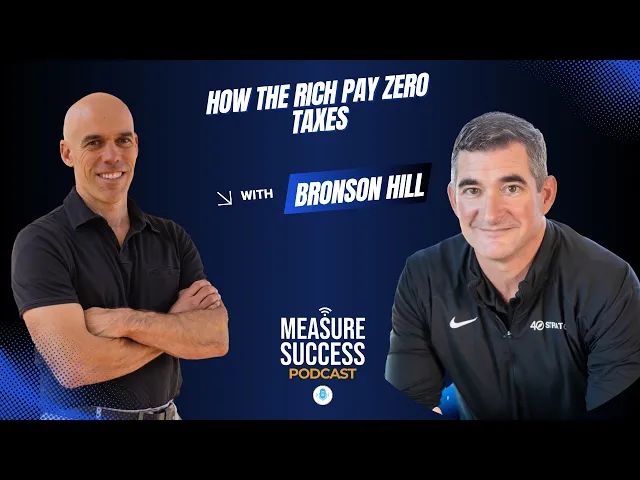
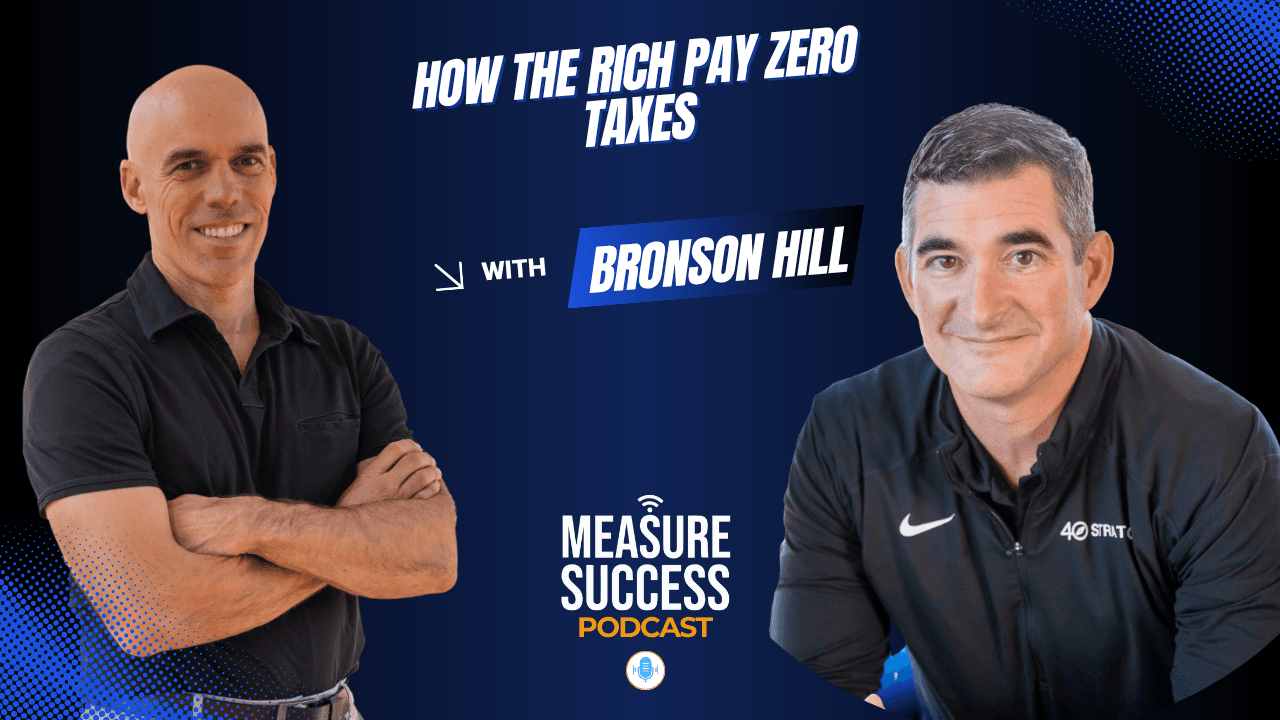
Bronson Hill shares how high earners legally cut their taxes through real estate, oil and gas, and passive income on the Measure Success Podcast. Listen now.

Words by
Carl J. Cox
Most people believe high taxes are simply the price of earning more. They aren't. The tax code is full of legal incentives most high earners never use. And most CPAs never mention them.
In this episode of the Measure Success Podcast, I sat down with Bronson Hill, founder and CEO of Bronson Equity and author of Fire Yourself, to discuss how high earners legally reduce their taxes, build passive income, and buy back their time. Bronson is a general partner in 2,500 multifamily units worth over $250M and has raised more than $45M from investors. He's also the host of The Mailbox Money Show.
Time Is the Real Goal, Not Money
Bronson spent 10 years in medical sales making over $250,000 a year.
The money was good. The freedom wasn't.
"I don't want more money, I want more time."
He points to a Warren Buffett line that reframed everything for him:
"Unless you learn how to make money while you sleep, you'll work until you die."
Whether you're a waiter or a doctor earning $3 million a year, trading time for money has a ceiling. Passive income is how you break it.
The Tax Code Is a Set of Instructions
The strategies Bronson uses aren't loopholes.
They're incentives written into the code on purpose.
The government wants private capital to fund housing and energy. So it rewards the people who provide them.
Depreciation rewards you for providing housing.
Drilling deductions reward you for providing energy.
Align with what the government is trying to encourage, and the tax benefits follow.
The Real Estate Professional Designation
This is one of the most powerful tools for high earners.
If you or your spouse put in 750 hours a year — and it's more than 51% of your working time — you can use real estate depreciation against your ordinary income.
Bronson used it to go from a 25% effective tax rate to about 1%.
The catch: you have to actually do the work, and you have to document it.
• A spouse who leaves a W-2 job can qualify • Becoming a real estate agent (a 1099 business) makes the hours easier to substantiate • Conferences, reading, driving for deals — it can count, if you track it
How a $2M Tax Bill Became $125K
Bronson shared a real example.
Two brothers sold their medical practice for $5 million.
Their tax bill was headed north of $2 million.
They got it down to $125,000.
How? Both of their wives became real estate professionals, invested in deals with heavy depreciation, and applied those losses against ordinary income.
"It normally would get to zero," Bronson said — they only paid because they live in California.
Oil and Gas: 80–90% Deductions Against Any Income
For over 100 years, the code has rewarded energy investment.
Drilling deals can deduct 80–90% of your investment in year one — against any type of income, not just passive.
Invest $100,000 in a 90% deal, and $90,000 comes off your taxable income.
Bronson also separates the two ways in:
• Drilling deals — the big active tax benefits • Royalties — land ownership, steadier cash flow, fewer tax perks
The old knock on oil and gas was risk. Twenty years ago, dry holes were common.
Today, with 3D mapping and horizontal drilling, Bronson says hit rates run above 99%. His partners have drilled over a thousand wells with fewer than five dry holes.
Most deals are $100,000 minimum and open to accredited investors.
Why Most CPAs Aren't Tax Strategists
This was one of the sharpest points in the conversation.
Most CPAs exist to file your return — not to hunt for incentives that lower your taxes.
Many are cautious by design. They don't want the audit risk, and they don't have the staff time.
"90% of the tax returns we see are done wrong."
A dedicated tax strategist may charge $5,000 to $10,000 to build a plan.
If that plan saves you hundreds of thousands, it's worth it.
Documentation Protects You
The real estate professional designation is one of the most scrutinized areas in the code.
That's exactly why documentation matters.
"If you have documentation, you reduce your risk of having a problem. If you are just saying, 'I'm doing it,' that's not evidence."
Keep a daily spreadsheet. Log the meetings, the drives, the conferences.
The deduction is only as strong as the paper trail behind it.
The Deal Funnel
Bronson evaluates every deal through a simple funnel.
Start with your goals, not the deal.
• Market — is it growing or shrinking? • Operator — do they have a real track record and shared values? • Deal — does it actually meet your goals?
And always ask the operator the same question: what's the biggest risk in this deal? The answer is usually different from what you'd guess.
Measuring Success: The Gap and the Gain
Bronson closed on something bigger than taxes.
He pointed to the book The Gap and the Gain.
Achievers are always staring at the next mountain — the gap between where they are and where they want to be. That's a recipe for permanent dissatisfaction.
Measure the gain instead. Look at how far you've come.
"If you want to feel more successful, just start counting the things you're grateful for."
Final Thoughts
This episode was about taxes on the surface.
Underneath, it was about time.
Bronson's whole approach — passive income, smart tax strategy, buying back hours — points to one idea: don't wait until you retire to live.
The strategies are legal. The incentives are real. Most people just never learn them.
To learn more about Bronson Hill and Bronson Equity, visit bronsonequity.com.
You can also connect with Bronson on LinkedIn for more on passive income, tax strategy, and real estate investing.
Listen to the full Measure Success Podcast episode today and continue building a strategy that helps you measure success the right way.


