
What AI Agents Mean for Small Business Growth
AI agents are changing business fast. Learn how leaders can prepare teams, systems, and strategy for the future of work.

Words by
Carl J. Cox
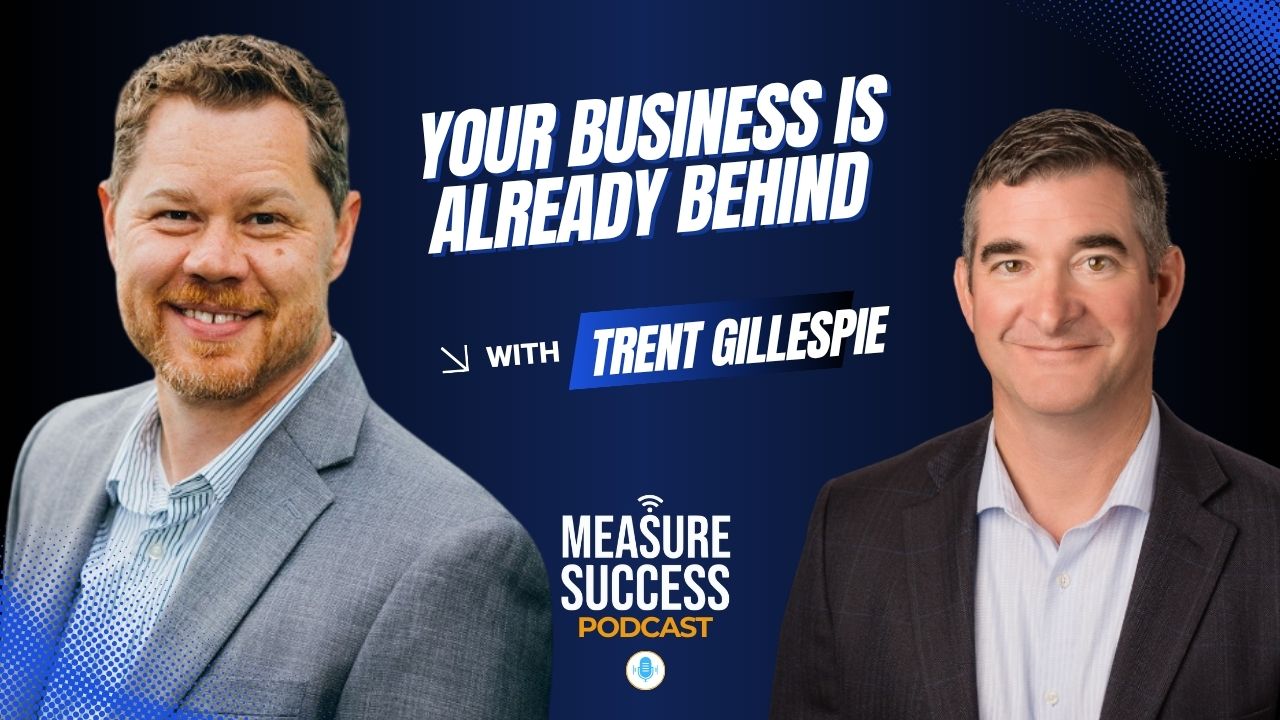
Artificial intelligence has moved beyond simple chat tools and email writing. Businesses are entering a new stage where AI can complete tasks, analyze information, recommend actions, and support entire workflows. For leaders, this shift creates both opportunity and pressure. In this episode of the Measure Success Podcast, I sat down with Trent Gillespie, former Amazon executive and CEO of Stellis AI, to discuss where AI is headed, why many organizations are behind, and what leaders can do today to prepare.
Trent Gillespie
Why This AI Moment Feels Different
AI systems are beginning to improve themselves. That creates faster cycles of innovation and shorter decision windows.
The result:
• Faster product development
• More competition
• Lower barriers to entry
• New customer expectations
• Faster business cycles
Many leaders still think AI means asking a chatbot questions. That mindset is already becoming outdated.
From Chatbots to AI Agents
Many organizations started with tools like ChatGPT for writing emails or summarizing documents.
That was step one.
Step two is agents.
AI agents are systems that can complete tasks with limited supervision.
Examples include:
• Reviewing large document libraries
• Researching prospects
• Creating reports
• Monitoring business systems
• Summarizing data
• Triggering actions
The question is no longer:
“Can AI help?”
The question is:
“What work should AI own?”
AI as Your Operating System
Businesses already have:
• CRM systems
• Accounting systems
• Project tools
• HR systems
• Marketing platforms
Increasingly, AI will become the interface between employees and systems.
Examples:
“Show me overdue deals.”
“What projects need attention?”
“What customers require follow up?”
This changes how work gets done.
Why Leaders Cannot Ignore AI Agents
AI agents handle repetitive work.
Humans focus on:
• Decisions
• Relationships
• Problem solving
• Innovation
• Strategy
Organizations increasingly need employees who can:
• Think critically
• Improve processes
• Innovate
• Learn quickly
• Work alongside AI
Four Steps to Build an AI Culture
Safe
Create guardrails and policies.
Normal
Make AI part of everyday work.
Expected
Set learning expectations.
Rewarded
Recognize experimentation.
Small wins create momentum.
Why Small Businesses Have an Advantage
Small businesses can:
• Move faster
• Test quicker
• Change processes easier
• Launch new services faster
Waiting may be riskier than starting.
Visibility Matters
Customers increasingly use AI search.
Ask yourself:
• Does AI understand our business?
• Are we publishing enough content?
• Can customers find us?
Build for Your Future Customer
Build for your future customer.
Not your current comfort level.
Future customers will expect:
• Faster service
• Better experiences
• AI-supported interactions
• Faster decisions
The companies that win will not necessarily know the most prompts.
They will build cultures that learn faster.
Listen to the full episode and ask yourself:
Are you building for your future customer?


