Get Paid For Your Screen Time: The AI Play
Mode Mobile CEO Dan Novaes shares how he survived a near-collapse, pivoted to profit, and turned users into investors on the Measure Success Podcast. Listen now.

Words by
Carl J. Cox
Most founders chase growth. Dan Novaes chased it all the way to the #2 fastest-growing company in America, and then watched it nearly collapse. What he did next is the real story.
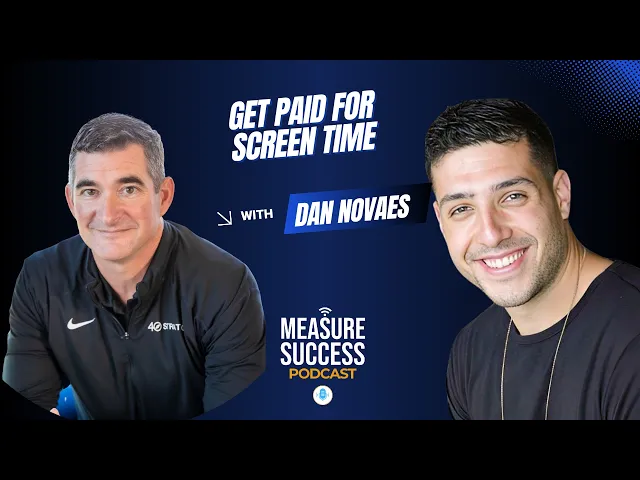
In this episode of the Measure Success Podcast, I sat down with Dan Novaes, co-founder and CEO of Mode Mobile, to discuss surviving a near-death moment after explosive growth, the mindset that carried him through, and how he turned his users into investors. Mode Mobile now has over 100 million users across 170+ countries and is on track for $60 million in revenue this year.
From eBay Hustler to Mobile Founder
Dan was wired for business early.
He started a company at 16, using his employee discount at a Polo store to resell items on eBay. In four or five months he made about $30,000, enough starting capital to go bigger.
Growing up between southern Indiana and São Paulo, Brazil, he saw price differences everywhere. That shaped how he thinks to this day.
"Everyone always tends to focus on one market, but there's opportunities and arbitrages and inefficiencies in a lot of different other markets."
By his freshman year of college, his electronics export business was doing a couple million dollars a year.
The 32,481% Growth, and the Crash That Followed
After years of small wins and small exits, Mode Mobile finally hit it.
The company rewards people for the time they spend on their phones. It took off, earning Deloitte recognition for 32,481% growth.
Then the market turned.
At the start of 2022, right after his best quarter ever, the frothy market that funded his revenue fell apart. Advertisers went bankrupt. Crypto companies like Voyager and FTX collapsed. Payback periods stretched from three months to nine or twelve.
With 100 employees and revenue that suddenly wasn't coming in, the unit economics broke.
"The longer that you don't die, the higher likelihood of success."
Focus on What You Can Control
Dan's first move wasn't panic. It was a question.
What can I actually control?
Not the economy. Not interest rates. Not a war. Not which advertiser went under.
"People get hung up on things that they cannot control."
So he focused on what was his to move: plug the leak, don't die, and rebuild the model around profit. That meant laying off half the staff and pulling back marketing in a major way.
Rebuilding Around the Right People
Fast growth had a hidden cost, they'd hired the wrong people.
"We got enamored with the scale fast, and if you scale fast, you hire the wrong people."
Dan and his co-founder rewrote all of their core values, built from the traits of the people they most loved working with. Those values now live in a weekly meeting called ACT, where the team recognizes each other with points redeemable for cash and gift cards.
Today, unplanned turnover runs under 1% a year.
Turning Users Into Investors
Dan needed to lower costs without upsetting the users he was built to reward.
The idea: pay users partly in shares of the company.
That led him to crowdfunding. It took nearly a year to get audited financials and launch, but within three months he raised $5 million from tens of thousands of investors. The next year, he raised the maximum $75 million through Reg A.
Mode Mobile became one of the first companies qualified by the SEC to let users invest their reward points into shares.
"About a little over half of my investors are users of our product."
Roughly 60,000 people have now backed the vision.
Growth Without Growth-at-All-Costs
With capital in hand, Dan refused to repeat 2022.
Instead of burning cash to chase scale, he ran a page out of the private equity playbook: buy other apps at attractive multiples and integrate Mode's technology — its "EarnOS," the earning operating system behind its products.
Last year they acquired six to eight assets. It became a powerful growth lever and built a network effect across their products.
The Incentive Model and the AI Economy
Dan's thesis is simple: 1% of users pay, 99% don't.
But offer the 99% an incentive, share some data, do a task, and many will take the trade in exchange for premium access.
He sees this as urgent. 56% of Americans don't have $1,000 in savings. Billions earn under $12,000 a year. And AI displacement is coming.
Mode's goal is to help everyday people take part in the AI economy instead of getting left behind by it.
"Things happen the way it was supposed to happen."
How Dan Measures Success
In the business, Dan watches EBITDA per team and runs each business unit through a GM who operates like a micro-CEO. The goal is to grow, but profitably.
He also measures success by community. Mode does earnings calls it isn't required to do, because transparency matters to the 60,000 people who backed it.
In his personal life, the metric changed. Am I growing? Am I present with family, faith, and friends? Am I having an impact beyond myself? Am I remembering to enjoy it?
"You forget to have fun."
The Habit That Keeps Him Going
Dan's most consistent habit for nearly eight years: a weekly float tank.
Complete darkness. Saltwater. No senses. He doesn't go to rest, he goes to think.
"It's like a think with a supercharge."
It was his wife's idea to make it weekly instead of quarterly, so the ideas come steadily instead of in one overwhelming purge.
Final Thoughts
Dan Novaes' story isn't about avoiding the crash.
It's about what you do when everything you built starts falling apart: focus on what you can control, rebuild around the right people, and find the greater opportunity hiding inside the setback.
The crisis didn't end his company. It transformed it into something better.
Listen to the full episode and ask yourself: when everything is falling apart, are you spending your energy on what you can't control, or on what you can?