SEO Is Dying: How to Get Found by AI
Jimi Gibson of Thrive Agency reveals why SEO is dying, how AI search works, and three ways owners can get found by AI on the Measure Success Podcast. Listen now.

Words by
Carl J. Cox
For twenty years, the game was simple. Optimize for keywords. Rank on page one. Win the click. That game is ending. And most business owners have not noticed yet.
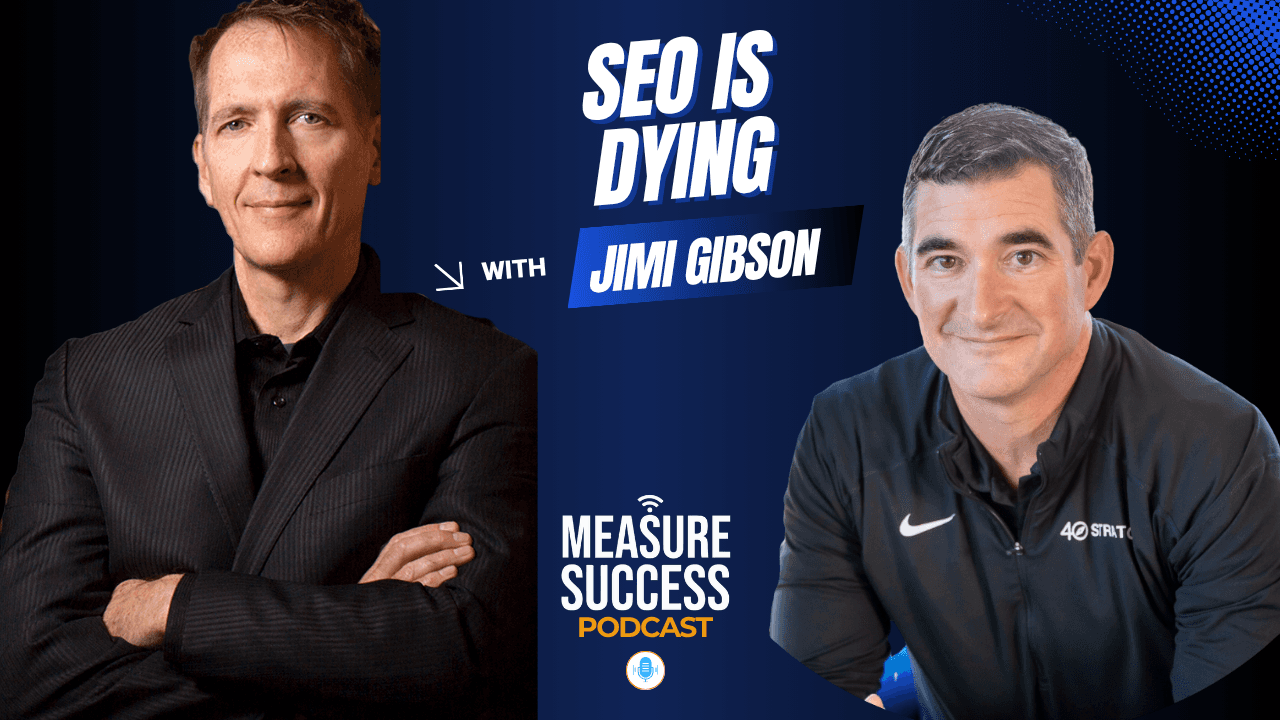
In this episode of the Measure Success Podcast, I sat down with Jimi Gibson, VP of Brand Communication at Thrive Internet Marketing Agency, TEDx speaker, and former professional magician, to discuss how AI is rewriting search and what owners must do to stay visible. Jimi has spent his career watching algorithm updates come and go. He calls this shift the most disruptive he has seen since desktop publishing.
Why Search Just Changed Forever
Search used to send you ten blue links.
You picked one. Maybe the seventh. You clicked through.
Now most people never click at all.
"60% of Google queries ended up in zero click last year."
AI summaries, AI mode, featured snippets, and knowledge panels answer the question right there on the page. People get what they need and move on.
At the same time, they are leaving Google entirely for tools like ChatGPT, Claude, Gemini, Grok, and Copilot. A typical Google search was five or six words. A first conversation with a large language model is closer to 32 words.
The behavior has changed. The strategy has to change with it.
Invisible Owners Create Invisible Companies
When the writing hit the wall, Jimi ran the numbers himself.
His team studied 400 companies across five industries and asked a simple question: who is visible to AI, and who is not?
The answer was startling.
46% of business owners were invisible to AI.
"Invisible owners create invisible companies."
That line became the center of his work. It is also a window of opportunity, because most of your competitors have not fixed this yet.
Why AI Likes People More Than Logos
Personal branding used to be optional. Owners could hide behind the logo.
Not anymore.
AI is looking for experience, expertise, authoritativeness, and trustworthiness. Those things attach to a person, not a brand mark.
"Where personal branding used to be sort of a fluffy thing... that's not the case anymore because they want to know who's behind it."
You do not have to be an influencer. You do not have to do TikTok dances or chase 100,000 followers. What you need is relevant content, repeated in different ways in different places, so AI can triangulate who you are and what you know.
The Numbers Behind Visibility
This is not a hunch. Jimi tracked it.
• A Search Engine Journal and LinkedIn study found that an executive who posts just 10 times a year grows their referral base by 30% and sees deals 3.7 times larger. • Year over year, companies that stayed invisible saw traffic drop 28%. Companies where the owner and business were visible grew 2.5% — while organic traffic overall was falling. • Gartner projects organic traffic will drop 25% this year and 50% by 2028.
Then the kicker.
For a $7.5M company, the visibility gap is $5.6 million over three years. The owner's personal visibility accounts for $2.8 million of that. For a $24M business, the gap is $19 million.
You can gain it, or you can lose it.
Three Things to Do Today
Jimi's advice for the do-it-yourself owner who wants to get found:
1. Decide what you want to be known for. Not 100 things. Three to five. You should be able to say it in one sentence. Then dust off your LinkedIn profile, drop the clever title, and fill out the About section clearly so AI can match you to your topics.
2. Start a YouTube channel. Even if nobody subscribes, AI scrapes the transcripts and starts to position you. YouTube sits near the top of the places AI pulls from.
3. Build your home base. Make your website's About page the index of everything AI should know about you — articles, podcasts, your YouTube channel, your LinkedIn. Add an LLMs.txt file to guide the models. Then create a Wikidata page, the accessible companion to Wikipedia that sends strong identity signals.
"The bar is literally on the floor. All you've got to do is step over the bar."
The YouTube Hack Anyone Can Use
Scared to start? Jimi's shortcut removes the excuse.
Set up a channel on your phone. Get a small tripod. Find good lighting and avoid a backlight.
If a monologue feels awkward, get a colleague or friend on Zoom and have a real conversation about something topical in your industry. Save the recording and post it.
"AI loves clarity, coherence and consistency."
Consistency beats polish. Do it on repeat — a LinkedIn post one week, a YouTube video the next.
How Jimi Measures Success
Success looks different for every client, but the math has not really changed. It has just shifted its flow.
The old question was: how many keywords do you rank for?
The new question is: how visible are you in the large language models, and what does that mean for revenue?
Thrive builds a custom approach, then attributes the traffic and revenue that visibility drives. Notably, a referral from a large language model converts about four and a half times better than an organic search visitor — because people arrive already pre-sold.
The Magic Behind the Message
There is a reason Jimi thinks about giving your talent away.
Years ago, chasing a TEDx spot, he and his wife sponsored a young boy named Emmanuel in Rwanda. On a visit, they noticed something was off, and an investigation revealed Emmanuel had lived with an ear infection for eight years, hidden because his family could not afford treatment.
Driving home from a magic show one night, Jimi's wife told him the price of the surgery. It was the exact amount he had just earned performing — doing something he had done since he was six and would have done for free.
That became his TEDx talk: "You have magic power, use it for good."
His book recommendation carries the same theme: I'm Possible by Jeremy Cowart.
"Stop looking in the mirror of what you can do. Look out the window of who's across the street."
Final Thoughts
Search is not dead. It is moving.
The owners who win the next three years will not be the ones with the most followers. They will be the ones who decided to be visible while the bar was still on the floor.
This episode covered: • The end of the ten-blue-links era • Why owner visibility now drives company value • The research behind AI visibility • A three-step plan any owner can start this week • How to measure success in the age of AI search
To learn more about Jimi Gibson and his team, visit thriveagency.com. You can also connect with Jimi on LinkedIn, where he posts five days a week on visibility and AI search.
Listen to the full Measure Success Podcast episode today and continue building a strategy that helps you measure success the right way.