How to Move from Employee to Business Owner
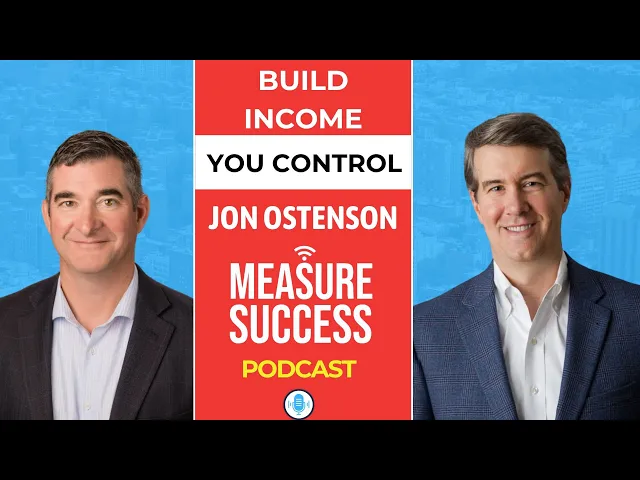
Franchising, AI, and passive income explained. Learn how to build control, create income streams, and take your next step. Listen now to Jon Ostenson.
Words by
Carl J. Cox
Why More Professionals Are Turning to Business Ownership The job market is changing fast. Many professionals who once felt secure now face new uncertainty. Technology, especially AI, is reshaping roles across industries. Work that once took days now takes minutes. Companies expect more output with fewer people. This shift has led many people to ask a simple question: Should I build my own business? In this episode of the Measure Success Podcast, Carl Cox speaks with Jon Ostenson, a leading franchise consultant, about what is driving this change and how people can respond.
The Reality of Business Ownership
Business ownership is not easy. Jon shares a personal story about launching a company that grew but failed to produce profit. The business had employees, clients, and revenue, but it did not work financially.
That experience taught a key lesson.
Revenue does not equal success. Profit does.
Many businesses look strong from the outside. Inside, they struggle. This is why business owners must focus on the right metrics and make hard decisions when needed.
Why Franchising Is Growing
Franchising offers a different path into business ownership. Instead of building from scratch, owners follow a proven model.
Jon explains that the most successful franchise owners share one trait. They follow the system.
They do not try to reinvent the process. They trust the model and execute.
Franchising provides:
• Standard operating procedures
• Marketing systems
• Technology tools
• Peer support from other owners
• Ongoing coaching
This structure helps reduce risk and shorten the learning curve.
The Mindset Shift from Employee to Owner
One of the hardest changes is mental.
Employees receive a paycheck. Business owners create value that produces income.
Jon sees this shift often. Some people embrace it. Others struggle.
Successful owners:
• Take responsibility for results
• Invest in marketing and growth
• Make tough hiring decisions
• Seek feedback and coaching
Those who fail often try to control everything or avoid risk.
The Impact of AI on Career Decisions
AI is not a future issue. It is happening now.
Companies are asking fewer people to do more work. Some roles are disappearing. Others are changing.
This has created a new type of entrepreneur. Many are not chasing a dream. They are responding to risk.
They want:
• Control over income
• Flexibility in schedule
• Long-term financial security
Jon confirms that more professionals are exploring business ownership because of these concerns.
What Types of Businesses Are Growing
One of the most interesting insights from the episode is this:
“Non-sexy” businesses often perform best.
These include:
• Home services (flooring, insulation, repairs)
• Property services (cleaning, maintenance)
• Senior care and support services
• Pet services
• Simple B2B services
These businesses are stable. They meet everyday needs. They produce consistent cash flow.
People will always spend money on their homes, health, families, and services that support daily life.
Investment and Risk
Most franchise investments fall between $150,000 and $400,000.
This includes:
• Franchise fees
• Startup costs
• Working capital
Many owners use SBA loans, retirement funds, or lines of credit.
This is real money. It requires careful thinking.
Jon emphasizes that owners must understand their “why” before investing.
Why take the risk?
What outcome are you trying to achieve?
What income do you need?
Clear answers lead to better decisions.
What Success Looks Like
Success is not the same for everyone.
Some want to replace their income.
Others want multiple income streams.
Some want to build an asset they can sell.
Jon measures success in a simple way.
Do clients grow?
Do they expand into new locations?
Do they refer others?
These are strong signals that the business is working.
The Role of Passive Income
One concept stands out in this episode.
Passive income.
The goal is simple:
Build income streams that cover your expenses.
When that happens, you gain freedom.
You can choose how to spend your time. You are not tied to a paycheck.
Business ownership can help create this, but it requires planning, discipline, and execution.
The Power of Timing
Many people wait for the right moment.
Jon challenges this idea.
The timing is never perfect.
People delay because of fear, family responsibilities, or uncertainty.
But those who act often look back and wish they had started sooner.
Final Thoughts
This episode is not just about franchising. It is about control, mindset, and strategy.
The world is changing. The rules are shifting.
You have a choice.
Stay where you are and adapt.
Or build something of your own.
Both paths require effort. Both carry risk.
The key is to choose with clarity.
Call to Action
Listen to the full episode and think about your next move.
What are you building?
What is your strategy?
How are you measuring success?
Connect with Jon:
LinkedIn https://www.linkedin.com/in/jonostenson/
Facebook https://www.facebook.com/JonOstenson1
Book Non-Food Franchising
Book Link https://www.amazon.com/Non-Food-Franchising-Better-Business-Ownership/dp/B0BJNDCGN4
Website https://franbridgeconsulting.com/