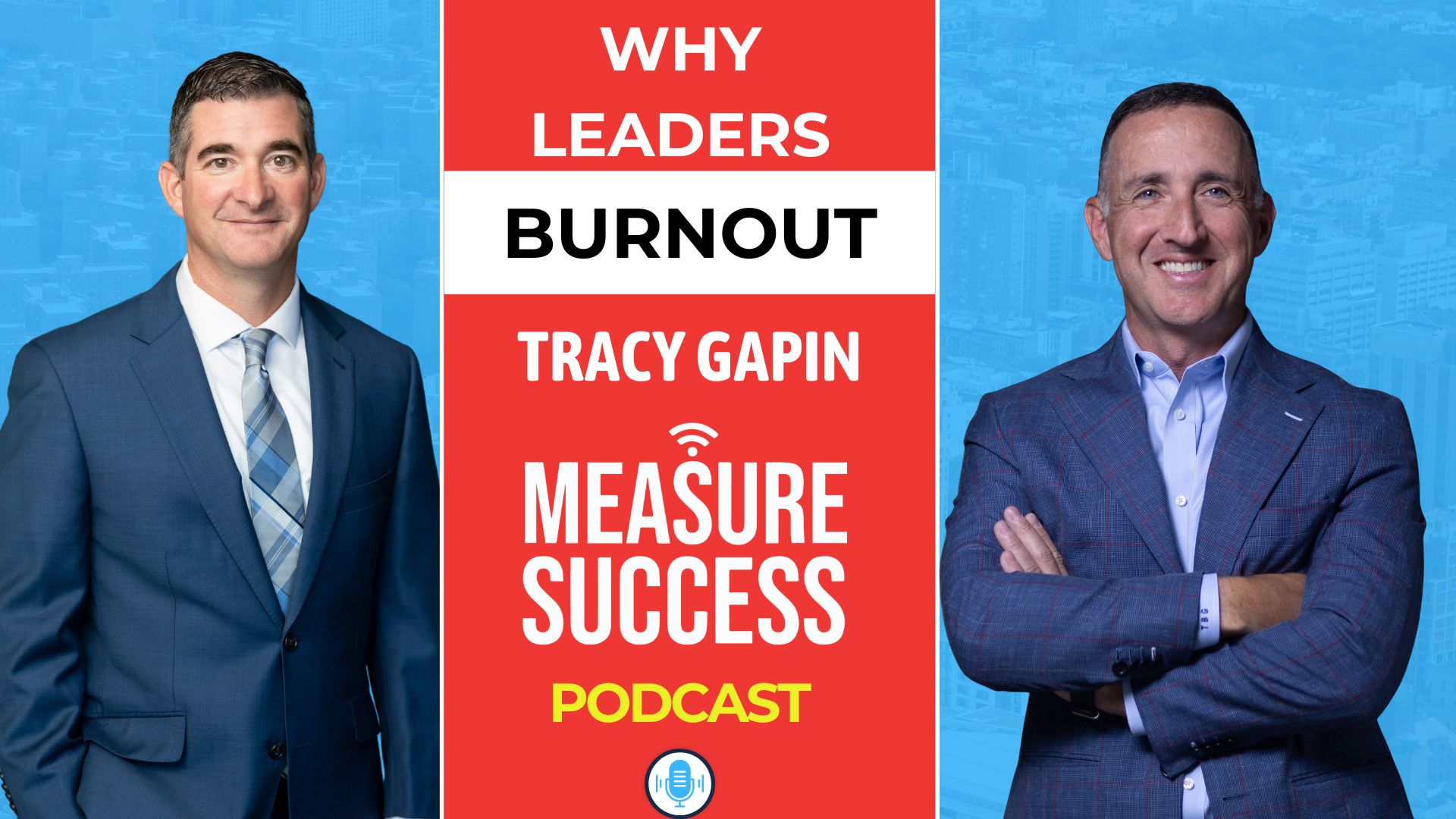
Why Leaders Burn Out and How to Prevent It
Entrepreneurs ignore health until performance drops. Learn how sleep, stress, and habits impact leadership success. Listen to this Measure Success episode.

Words by
Carl J. Cox
A Conversation with Dr. Tracy Gapin Many entrepreneurs believe success requires sacrifice. Sacrifice sleep. Sacrifice health. Sacrifice time with family. For years, this mindset shaped how leaders worked. Long hours and constant pressure were seen as proof of commitment. But what if that approach limits long-term success? In this episode of the Measure Success Podcast, Carl J. Cox sits down with Dr. Tracy Gapin, founder of the Gapin Institute and a physician who helps entrepreneurs and executives optimize their health and performance. tracy-carl The conversation explores a powerful question: How do leaders measure success beyond business results?
From Surgeon to Performance Expert
Dr. Tracy Gapin spent more than two decades in traditional medicine. He built a successful career as a board-certified urologist and robotic surgeon.
He launched surgical programs and treated complex medical conditions.
From the outside, everything looked successful.
But inside, something felt wrong.
After years in the healthcare system, he realized the model focused on treating problems rather than improving health. Doctors often had only minutes with each patient and relied on prescriptions instead of deeper solutions.
Eventually, Dr. Gapin made a major change.
He left traditional medicine and started the Gapin Institute, a practice focused on helping high-performing leaders improve energy, hormones, sleep, and long-term health.
The goal was simple.
Help entrepreneurs and executives perform at their highest level for decades.
The Hidden Health Problem for Leaders
Many leaders believe they are healthy.
They feel tired but assume it is normal.
They sleep poorly but blame stress.
They gain weight but accept it as aging.
Dr. Gapin explains that many executives face similar patterns.
They wake up tired.
They rely on caffeine to push through the day.
They work long hours and skip exercise.
They feel exhausted when they get home.
Over time, these patterns reduce performance.
Hormones decline.
Stress hormones rise.
Sleep quality drops.
The result is a slow decline in energy, focus, and motivation.
Many leaders do not notice the change because it happens gradually.
But the impact can be significant.
Why Many Men Wait Too Long
One theme in the conversation is how men approach health.
Many men delay medical care until something breaks.
They push through fatigue.
They ignore warning signs.
They assume stress is part of leadership.
Dr. Gapin explains that this mindset often leads to bigger problems later.
Health should not begin when a crisis occurs.
It should begin with prevention and optimization.
Testing, measurement, and awareness help leaders identify issues early and make small adjustments before major problems appear.
The Role of Hormones and Stress
One area many leaders overlook is hormones.
Hormones influence energy, metabolism, sleep, and mental clarity.
Over time, levels of testosterone, growth hormone, and other important hormones decline.
Stress also plays a major role.
Chronic stress increases cortisol, a hormone that affects sleep, weight gain, and inflammation.
When stress remains high for long periods, the body struggles to recover.
This cycle reduces energy and performance.
Dr. Gapin emphasizes that health is not just about one factor.
Sleep, nutrition, stress, and hormones all work together.
Improving one area often improves others.
Small Habits Create Big Change
A major theme in the conversation is habit formation.
Many people believe transformation requires dramatic changes.
But research shows the opposite.
Small habits create lasting results.
Dr. Gapin shares an example from behavioral science.
If someone wants to exercise, the goal may start with a simple habit such as putting on running shoes in the morning.
The action is small, but it creates consistency.
Over time, small habits become routines.
These routines improve health without overwhelming the person trying to change.
For leaders with demanding schedules, this approach works well.
Tiny improvements each day lead to major long-term results.
Sleep Is Often the Missing Factor
Another topic discussed in the episode is sleep.
Many entrepreneurs underestimate the importance of sleep quality.
They may sleep six hours and assume that is enough.
But sleep quality matters as much as sleep duration.
Deep sleep and REM sleep allow the body and brain to recover.
Without these stages of sleep, energy and mental clarity decline.
Dr. Gapin encourages leaders to monitor sleep patterns using wearable devices or sleep tracking tools.
Data helps identify problems and track improvement.
Better sleep often improves mood, decision-making, and productivity.
Measuring Health Like a Business
Entrepreneurs measure business performance with metrics.
Revenue.
Profit.
Growth.
Dr. Gapin believes health should be measured the same way.
Testing and tracking help leaders understand their health status.
Important metrics may include:
Hormone levels
Inflammation markers
Body composition
Blood sugar control
Sleep quality
Stress indicators
These measurements provide a clear picture of health.
Just like financial metrics guide business decisions, health metrics guide lifestyle decisions.
Success Beyond Business
One of the most powerful moments in the conversation comes when Carl asks Dr. Gapin how he measures success today.
The answer is simple.
Time with family.
Dr. Gapin explains that success now includes being present with his children, enjoying time together, and creating meaningful relationships.
Business success matters.
But true success includes health, relationships, and personal growth.
Many leaders realize this later in life.
The goal is to recognize it earlier.
A New Definition of Leadership
The discussion highlights a new model of leadership.
Strong leaders care for their teams.
But they must also care for themselves.
Energy, clarity, and emotional balance affect every decision a leader makes.
When leaders improve their health, they improve their leadership.
They think more clearly.
They communicate better.
They show up more fully for their teams and families.
Key Lessons from the Episode
Several important lessons emerge from this conversation.
Health affects leadership performance.
Sleep and stress play major roles in energy and focus.
Small daily habits create meaningful long-term change.
Testing and data help identify hidden health issues.
True success includes family, purpose, and longevity.
These lessons apply to entrepreneurs, executives, and anyone responsible for leading others.
Final Thoughts
Many leaders measure success through revenue, growth, and business outcomes.
But long-term success requires more than business metrics.
It requires health.
Energy fuels performance.
Sleep supports decision-making.
Strong habits sustain leadership.
Dr. Tracy Gapin’s work focuses on helping leaders build this foundation.
Because when leaders improve their health, they improve every area of their lives.
Listen to the Episode
If you want to learn how health affects leadership performance, listen to the full conversation with Dr. Tracy Gapin on the Measure Success Podcast.
You will gain insights that may change how you approach both business and personal success.
🎧 Listen now and start measuring success in a new way.
Connect with Tracy:
LinkedIn https://www.linkedin.com/in/tracygapin/
Facebook https://www.facebook.com/drtracygapin/
Instagram https://www.instagram.com/drtracygapin/
Twitter https://x.com/DrGapin
Book Male 2.0 and Codes of Longevity
Book Link https://www.amazon.com/Male-2-0-Cracking-Limitless-Vitality/dp/0578605961 , https://www.amazon.com/Codes-Longevity-Leading-Potential-Optimized/dp/1735373850
Website https://gapininstitute.com/