Tariffs, Energy, and AI: Economic Signals to Watch
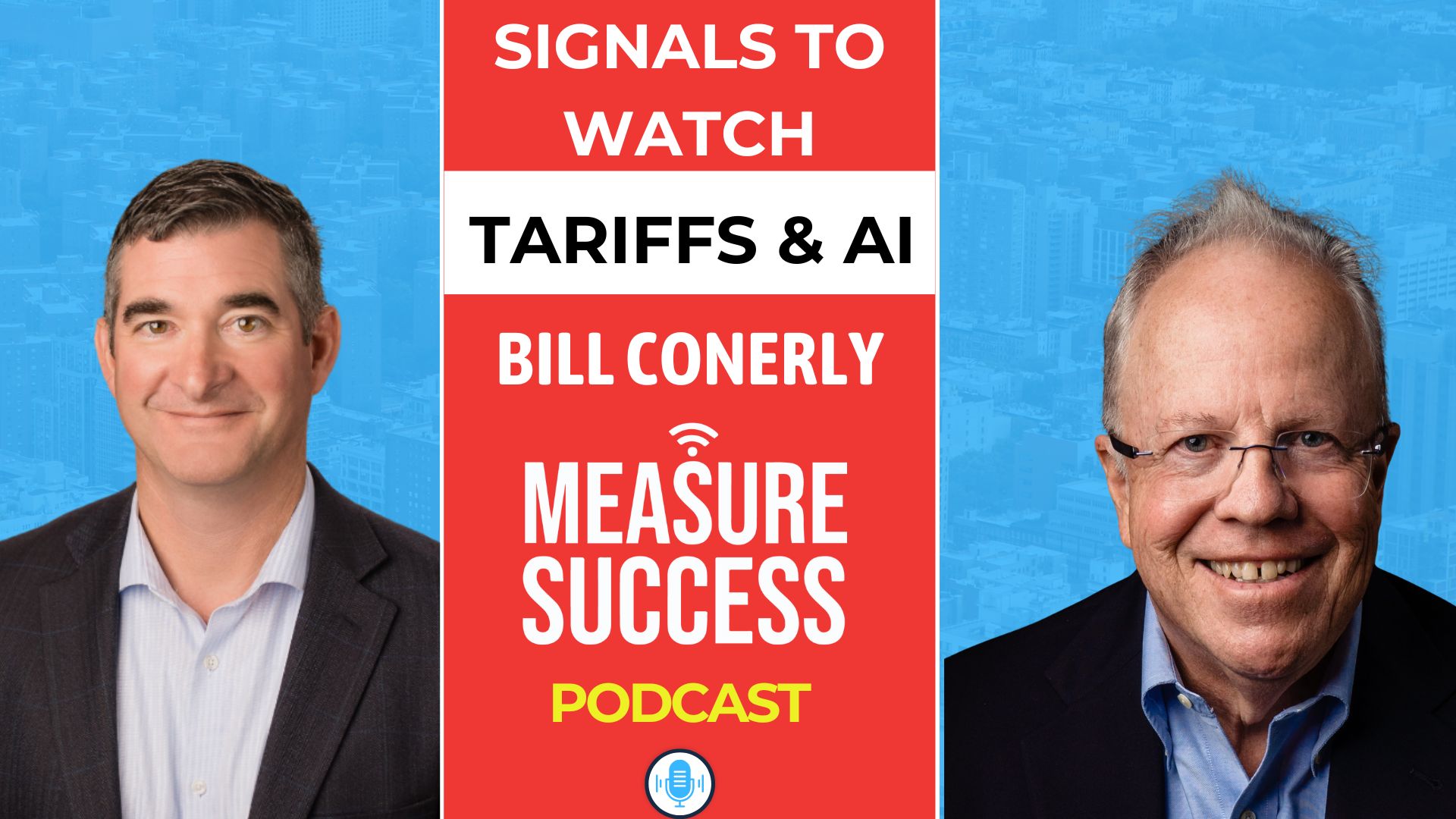
Economist Bill Connerly explains tariffs, AI, supply chains, and energy risks shaping business strategy in this Measure Success Podcast episode.

Words by
Carl J. Cox
Economic headlines move quickly. Strategic decisions require deeper thinking. In this episode of the Measure Success Podcast, Carl J. Cox sits down with economist Dr. Bill Connerly to discuss the forces shaping the global economy and how business leaders should respond. Their conversation moves beyond headlines. Instead, it focuses on the economic signals leaders should understand when planning strategy. The discussion covers tariffs, supply chains, artificial intelligence, labor markets, and global energy risks. Each topic reveals how economic forces influence real business decisions.
The Long-Term Impact of Tariffs
Tariffs often dominate economic news cycles. Many leaders assume tariffs cause immediate economic damage. The reality is more complex.
Economists have opposed tariffs for centuries. Even Adam Smith argued against them in The Wealth of Nations.
Still, tariffs do not always create immediate recession.
Instead, tariffs reshape how companies think about supply chains.
For years, businesses focused on a single question when sourcing products:
Where is the lowest cost supplier?
Recent events have changed that mindset. Businesses now balance two factors:
Price and reliability.
Disruptions such as pandemics, shipping blockages, and geopolitical tensions forced leaders to rethink supply chains. That shift will influence sourcing decisions for years to come.
Companies may still source globally. However, leaders now evaluate risk, reliability, and supply stability alongside price.
Supply Chains Are Entering a New Era
Business leaders face a different environment today than they did just a few years ago.
Companies once assumed global supply chains would remain stable. That assumption no longer holds.
Instead, leaders now ask different questions:
• Can the supplier deliver during disruption?
• Can the product be sourced domestically if needed?
• How much inventory risk exists in the system?
Instead of making large strategic shifts overnight, leaders should evaluate sourcing decisions case by case.
Some products may justify local production. Others may still require international supply chains.
The goal is not perfection. The goal is resilience.
Inventory Strategy Is Also Changing
Another important factor in supply chain strategy is inventory management.
Low inventory reduces risk in many situations. Excess inventory can create major financial pressure if products fail to sell.
However, recent disruptions revealed a different risk.
Companies with extremely lean inventories sometimes struggled to meet customer demand when suppliers faced delays.
The lesson for leaders is simple.
There are no perfect inventory strategies.
Instead, companies must balance efficiency with resilience.
Why Economic Data Can Feel Misleading
Another key topic in the episode focuses on economic perception.
Many business leaders believe layoffs are rising dramatically. Yet unemployment data tells a different story.
Layoff announcements may increase while unemployment claims remain low.
This gap exists for several reasons.
Some companies announce large layoffs to comply with regulatory requirements.
Many workers find new jobs quickly before filing unemployment claims.
Others choose early retirement instead of reentering the job market.
These factors create a situation where news headlines feel negative even when labor markets remain strong.
Understanding this difference helps leaders avoid decisions based only on headlines.
Artificial Intelligence and Productivity
Artificial intelligence has become one of the most discussed economic topics.
However, the biggest benefits may not come from widely known AI tools.
Instead, the largest gains will come from specialized applications designed for specific industries.
For example:
Construction firms may use AI tools to analyze blueprints and estimate project costs.
Healthcare providers may use AI to document patient visits, saving valuable time.
Customer service systems may use AI to resolve questions faster and improve service quality.
These applications create productivity gains that spread across entire industries.
Energy Risk and the Global Economy
Energy markets remain one of the largest economic risk factors.
Oil still represents a large share of global energy consumption. Much of that supply passes through narrow shipping routes in the Middle East.
Disruptions in those regions can influence global energy prices and economic stability.
Short conflicts may create temporary price spikes.
Longer disruptions, however, could create broader economic consequences.
Energy prices influence transportation costs, manufacturing costs, and consumer spending.
For that reason, business leaders should monitor energy markets closely.
Who Benefits Most from AI
While AI creates disruption in some industries, it will also create opportunity.
Several sectors are likely to benefit most:
Transportation and logistics
Healthcare services
Customer service operations
Manufacturing planning systems
These industries manage large amounts of data and complex coordination between systems.
AI tools can reduce manual work and improve efficiency in those environments.
Innovation and Competitive Advantage
Labor-saving innovation does not always reduce employment within the companies that adopt it.
Instead, innovation often shifts employment toward companies that adapt faster.
Businesses that adopt new technology often grow faster and hire more people. Companies that resist change struggle to compete.
For leaders, the lesson is clear.
Innovation is not optional.
Companies that adopt new tools early often gain competitive advantage.
Final Thoughts
Economic uncertainty will always exist.
Tariffs, supply chains, artificial intelligence, and energy markets all influence the business environment.
Leaders who understand these forces make stronger strategic decisions.
This episode offers a clear look at the trends shaping the next decade of business strategy.
Listen to the full conversation and consider how these insights apply to your organization.
Connect with Bill:
LinkedIn https://www.linkedin.com/in/businomics/
Twitter @BillConerly
Book The Flexible Stance: Thriving in a Boom/Bust Economy
Book Link https://conerlyconsulting.com/writing/the-flexible-stance/
Website www.conerlyconsulting.com