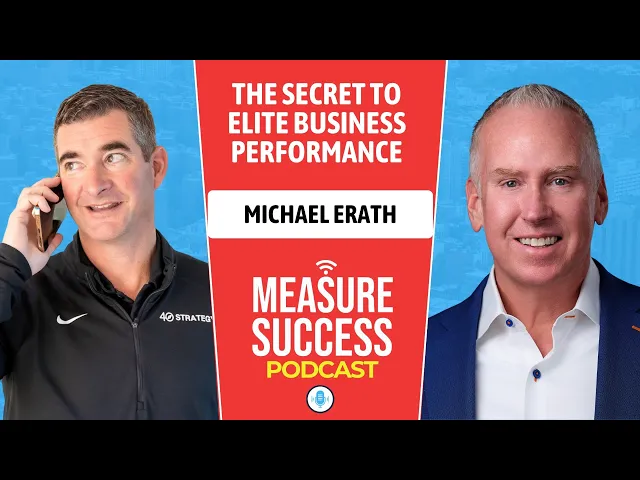
The Secret to Elite Business Performance
In this episode of the Measure Success Podcast, host Carl J. Cox sits down with Michael Erath, founder of Next Level Growth and author of The Five Obsessions of Elite Organizations. Michael’s story isn’t one of easy wins or instant success. It’s a story of rising, falling, and rebuilding with intention — and it’s a powerful blueprint for any entrepreneur who wants to lead with clarity and create lasting impact.
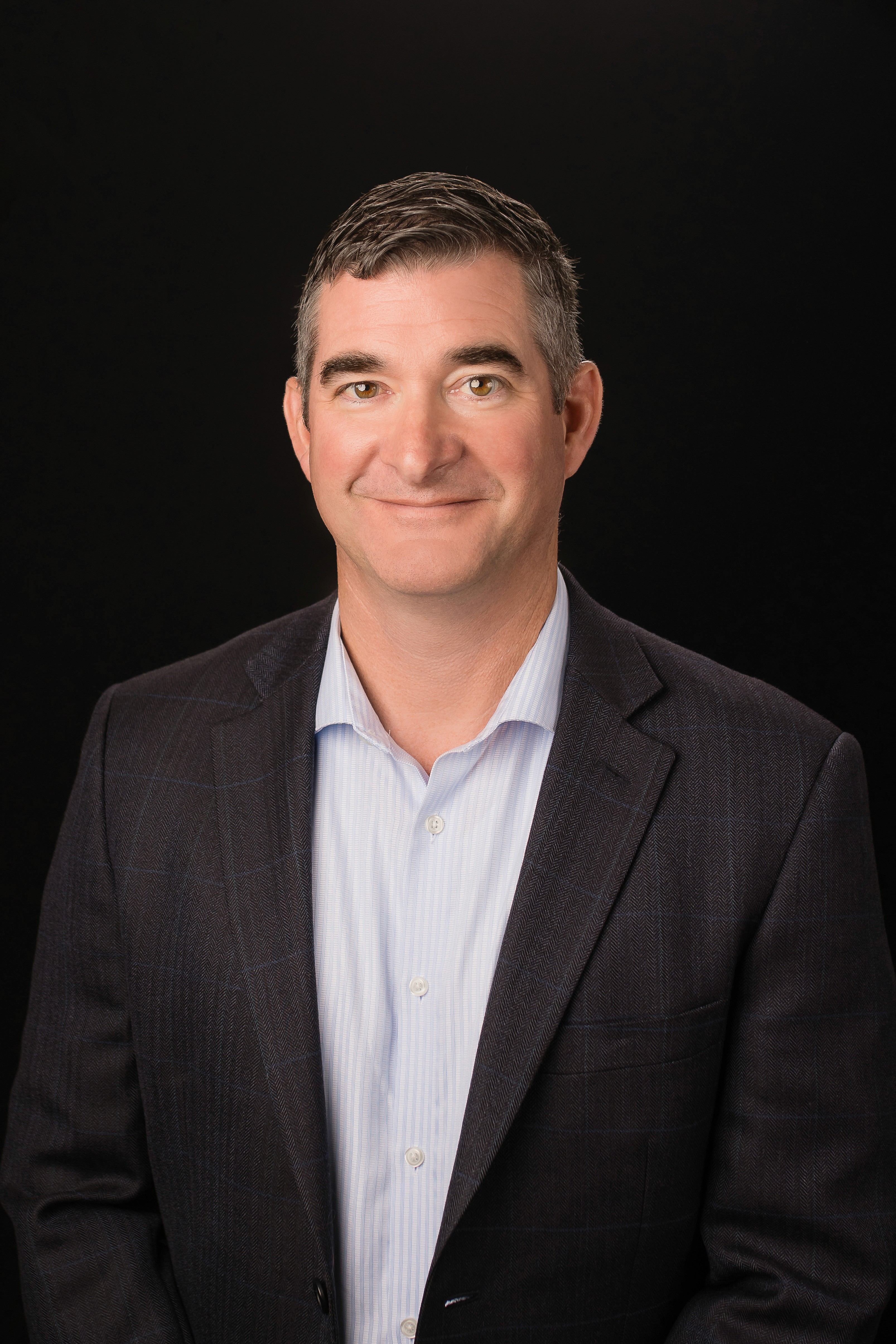
Words by
Carl J. Cox
From Collapse to Clarity: Michael Erath’s Five Obsessions for Building Elite Organizations
The Measure of True Success
What does it really mean to measure success?
For some leaders, it’s about revenue growth, market share, or scaling teams. But for others, success runs deeper — it’s about impact, purpose, and resilience in the face of adversity.
Part 1: From Success to Crisis — and the Turning Point That Changed Everything
Michael’s career began in his family’s manufacturing business, a company built around hardwood veneer for the furniture industry. By his mid-20s, he had taken over as president, guiding the company through major expansion and global shifts. Under his leadership, the business grew from $8 million to $45 million in annual revenue, with offices across six continents.
But then came the perfect storm:
The 2008 financial crisis crushed demand in the housing and furniture markets.
His business partner — and close friend — was discovered committing bank fraud and embezzlement.
Within days, Michael went from leading a thriving company to facing total collapse. “It was like hearing about a sudden death,” he recalls. “Everything I thought I knew about business, trust, and leadership was shaken.”
Instead of declaring bankruptcy and walking away, Michael chose a harder, more principled path. He negotiated directly with the bank to liquidate the company in an orderly fashion — protecting employees, creditors, and his family’s reputation. It took years to unwind, but that decision preserved his integrity and laid the groundwork for his comeback.
That crucible moment redefined how he viewed leadership. It taught him that success isn’t just about growth — it’s about resilience, clarity, and the systems that support both.
Part 2: Rebuilding and Redefining Success
After closing the chapter on his first company, Michael and his wife moved from Virginia to Ohio to start over. They launched a new business, built it to over $7 million in revenue, and eventually exited successfully.
But what mattered most wasn’t the financial comeback — it was the mindset shift.
“Through all of that, I learned to pursue not just a return on investment, but a return on life,” Michael says.
That idea — balancing profitability with purpose — became the foundation of his next venture, Next Level Growth, a firm dedicated to helping leaders build elite, principle-driven organizations.
Drawing from his own experiences, as well as time as an implementer for the Entrepreneurial Operating System (EOS), Michael noticed something troubling in the business coaching world: too many systems put the system before the user.
He explains: “Prescriptive models make the process more important than the people using it. I wanted to flip that. The goal should always be to help the user — the entrepreneur — get the results they want in a way that fits their culture.”
That insight inspired his book, The Five Obsessions of Elite Organizations — a roadmap for building companies that perform at a world-class level, without losing sight of purpose and humanity.
Part 3: The Five Obsessions of Elite Organizations
Michael’s research across for-profit, nonprofit, and even sports organizations revealed five universal principles — what he calls obsessions — that separate elite organizations from average ones.
1. Great People
Elite organizations start with great people — not just in talent, but in alignment.
Michael defines great people as those who:
Embody the company’s behavioral core values
Fit its culture
Have the skills and the desire to perform to a high standard
He points out that most organizations fail here because they confuse skill for fit. “You can have someone brilliant in their craft, but if they don’t align with your values, they’ll drag the culture down,” he says.
Hiring and developing great people means setting a high bar and creating systems that reinforce it — from recruiting and onboarding to performance reviews and coaching.
2. An Inspiring Purpose
Many businesses invest heavily in external marketing but neglect internal marketing — helping team members feel inspired and emotionally connected to the company’s mission.
“If people don’t feel connected to the purpose behind their work, their job becomes transactional,” Michael explains. “When they do connect, they bring creativity, energy, and ownership.”
He draws parallels to elite sports teams like the North Carolina Tar Heels, where a sense of shared purpose and camaraderie was the foundation of sustained success. In business, an inspiring purpose aligns people emotionally and keeps them driven through change and challenge.
3. Optimized Playbooks
The third obsession is about structure.
Michael warns against what he calls “organizational chaos by neglect.”
Every organization needs playbooks — clear systems and processes that guide daily work. While most businesses understand this, few invest the time to document or update them. “They say they’re too busy to build systems,” Michael says, “but the reason they’re so busy is because they don’t have systems.”
Optimized playbooks create freedom, not restriction. They ensure that as companies grow, performance remains consistent and scalable.
4. A Culture of Performance
Elite organizations don’t tolerate mediocrity — and they don’t confuse kindness with complacency.
“It’s hard to hold people accountable,” Michael admits. “It’s emotionally uncomfortable. But when we tolerate underperformance, we enable failure — and that’s not noble.”
He emphasizes the importance of:
Clear expectations
Real-time feedback
Coaching for development
Guardrails for those who can’t or won’t improve
By creating a culture of performance, leaders create clarity, fairness, and upward momentum throughout the organization.
5. Growing Profits and Cashflow
Finally, Michael insists that elite organizations must obsess over profitability — not as greed, but as fuel.
“If you believe in your purpose, profit is what powers it,” he says.
Too many entrepreneurs treat profit as a byproduct rather than a priority. Michael challenges that mindset by teaching financial literacy — pricing strategy, cash conversion cycles, and understanding the real impact of discounts and margins.
“When you give a 10% discount, you often have to double your sales volume just to make the same gross profit,” he explains. “That’s not sustainable growth — that’s erosion.”
True financial strength allows leaders to reinvest in people, innovation, and purpose.
Part 4: The Hardest Obsession — and Why Most Leaders Avoid It
When asked which of the five obsessions is hardest to master, Michael doesn’t hesitate: culture of performance.
“It’s difficult because it requires emotional courage,” he says. “Leaders have to have uncomfortable conversations and face the consequences of accountability.”
The second hardest? Optimized playbooks.
Many leaders fall into the trap of believing they don’t have time to systemize. But that’s exactly why they stay stuck in chaos. “You’re too busy to create systems, but you’re busy because you don’t have them,” Michael says. “That’s the lunacy of it.”
Leaders who embrace both accountability and structure often find their organizations transform faster — with less stress and fewer fires to fight.
Part 5: Measuring Success — Beyond the Balance Sheet
At Next Level Growth, Michael helps companies define success on two levels:
The business’s summit — its three-to-five-year vision of what success looks like.
The founder’s summit — what the owner truly wants in life from and through their business.
By aligning both, leaders stop chasing generic goals and start designing their business intentionally — around the outcomes that matter most to them.
Some clients want to scale and sell. Others want to build a “freedom business” that runs without them. Both are valid, but both require different strategies.
“We call it a confirmation process, not a sales process,” Michael explains. “We confirm whether we’re the right guide for your climb up the mountain. Because we can only succeed together if you’re willing to do the work.”
Part 6: Leadership Lessons and Daily Habits
Michael’s philosophy of leadership is rooted in clarity and systems thinking. When things don’t go right — whether in relationships or operations — he looks for two things:
Unclear expectations
Broken systems
“Every system is perfectly designed to get the results it gets,” he says. “If you want better results, you need a better system.”
Personally, Michael measures success not by wealth, but by balance. At 55, his focus is on time, relationships, and presence. He uses time-blocking and intentional calendar design to create space for what matters most — his wife, family, and new granddaughter.
“I don’t have the financial freedom I once imagined, but I also don’t have financial worry,” he says. “That’s success to me — time and quality.”
Part 7: Lessons for Today’s Leaders
Throughout the conversation, Carl and Michael explore powerful insights relevant to every growth-minded leader:
Leadership is not about knowing everything. The best leaders stay humble, curious, and open to learning.
Systems drive outcomes. When your business feels chaotic, it’s rarely a people problem — it’s a system problem.
Resilience is learned in the climb. True growth happens when you face failure, learn, and rebuild with clarity.
Profit enables purpose. Without healthy cash flow, even the most meaningful missions burn out.
As Carl sums up, “If you build a great business, you create options. And options are the ultimate freedom.”
Part 8: Recommended Reading and Next Steps
Michael recommends the book Halftime by Bob Buford — a powerful reflection on how to use the “second half” of your life to give back and find deeper meaning after success.
He also encourages leaders to explore his latest book, The Five Obsessions of Elite Organizations, available on Amazon, Audible, or at fiveobsessions.com.
For those looking for a more interactive experience, he even built an AI-powered companion, available at askmichaelerath.com, to guide readers through the tools and principles in real time.
Conclusion: Measuring Success on Your Terms
Michael Erath’s journey is proof that failure isn’t final — it’s formative.
He turned one of the hardest experiences of his life into a framework that now helps hundreds of entrepreneurs lead more effectively, think more strategically, and live more intentionally.
As Carl J. Cox reminds listeners, “When you build principle-based systems, you can adapt to anything — market shifts, economic downturns, even personal crises. That’s the kind of resilience that defines elite organizations.”
If you’re ready to create a company that delivers both profit and purpose, this episode is a must-listen.
📘 Learn more about The Five Obsessions of Elite Organizations at fiveobsessions.com.
And if you’re ready to clarify your own growth strategy and measure success on your terms, connect with 40 Strategy to learn how we help leaders design scalable growth systems that deliver a return on life.
🎧 Listen to the full episode of the Measure Success Podcast featuring Michael Erath:


