
Where Do Leaders Go For Real Growth?
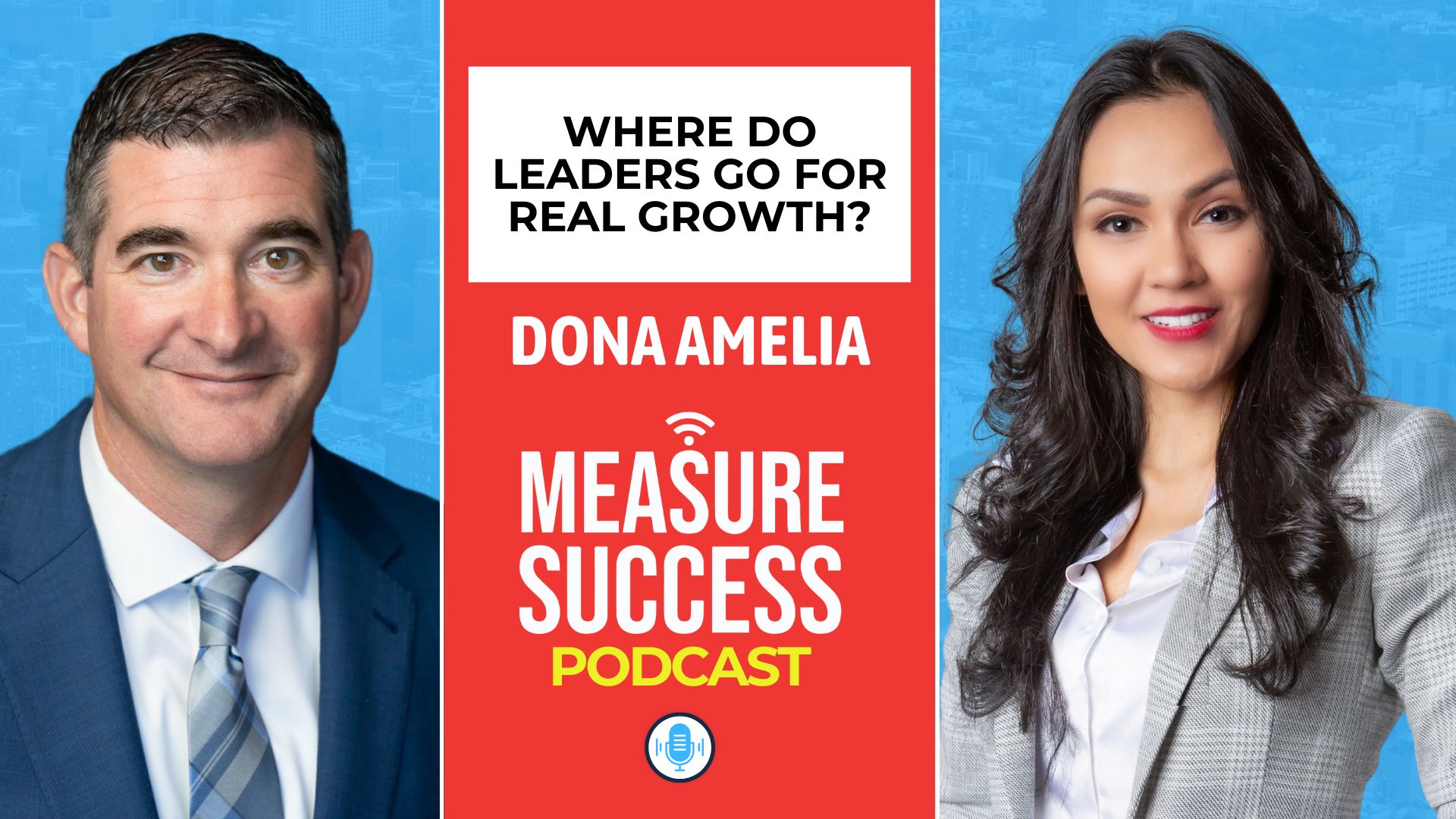
In this episode of the Measure Success Podcast, Carl J. Cox speaks with Dona Amelia, a global speaker, executive coach, and LinkedIn Top Voice with more than 75,000 followers. Dona has worked with leaders across industries and across the world. She is also the Managing Director and Co-Founder of Executive Global Network (EGN) in Singapore, Indonesia, and Malaysia.

Words by
Carl J. Cox
How Leaders Find Safe Spaces to Grow: A Conversation With Dona Amelia
Leaders often carry more weight than anyone around them realizes. They are expected to make quick decisions, stay calm under pressure, and know exactly what to do in every situation. But behind the title and the confidence that others see, most leaders experience something far more human uncertainty, isolation, and the fear of not having all the answers.
But her story did not begin in boardrooms or on stages. It began in a bamboo house with dirt floors, no electricity, and no clean water. Her journey from extreme poverty to global leadership shapes everything she teaches about growth, humility, and the power of safe spaces.
This long-form guide will walk through the key themes from the conversation what safe spaces for leaders look like, why they matter, how they work, and how they create better decisions, better teams, and better outcomes.
Whether you are a CEO, founder, operator, or rising leader, this episode gives you practical insight into how great leaders grow and why they cannot do it alone.
Growing Up With Nothing and Learning to Give
Dona begins the episode with a personal story that sets the tone for the entire conversation. She grew up in Indonesia in a bamboo home with holes in the walls, no electricity, and no running water. Her family struggled to afford basic essentials. Her mother and father both worked long hours to support the family, and Dona spent many days as a child walking long distances just to fetch water.
But what stands out most is not the hardship—it is the love and the wisdom she received. Her grandmother taught her a lesson that still shapes her leadership today:
“You can always give your smile. No one can take that away from you.”
This simple idea became her foundation. Even when she had nothing, she could still give kindness. She could still offer encouragement. She could still lift others.
This early experience helped her understand something powerful:
Leaders are not defined by what they have. They are defined by what they give.
And giving—especially giving support—is at the heart of building a safe space.
The Pressure Leaders Carry That Nobody Sees
As Dona moved through her career—as a performer, a DJ, an executive, and now a global leadership coach—she began to see a common pattern.
No matter how successful someone becomes, the pressure never goes away.
If anything, it intensifies.
Leaders must:
Look confident
Make decisions quickly
Stay steady through uncertainty
Protect their team
Hit goals
Handle crises
Appear strong
And worst of all—they often carry this pressure alone.
Leaders feel they cannot share their struggles with employees, because it may create fear or confusion. They cannot always talk to investors or the board, because it may affect perception. They often cannot talk to family members, because those people may not understand the specific challenges they face.
This creates a dangerous cycle:
The leader isolates themselves.
They avoid sharing what is hard.
Their thinking becomes less clear.
Their decisions become more reactive.
Their stress increases.
Their confidence drops.
This is why safe spaces matter. Without them, leaders often burn out or stagnate—no matter how talented they are.
What a “Safe Space” Actually Means for Leaders
When Dona talks about a safe space, she is not referring to therapy, hand-holding, or simple emotional support. She defines it clearly:
A safe space for leaders is a place where they can:
Speak honestly
Ask hard questions
Admit what they do not know
Receive unfiltered feedback
Learn from others with no hidden agendas
Share challenges without judgment
Grow with people who understand
It is a place where they can remove the armor they wear every day.
A place where they do not have to be perfect.
A place where people speak to them—not because of their title, but because of their humanity.
This kind of environment is rare. But when leaders find it, everything changes.
Why Leaders Need Support From People Outside Their Company
One of Dona’s most important insights in the episode is this:
Leaders cannot get this level of support from inside their own organization.
Here’s why:
Employees filter what they say because of job security.
The CEO’s presence changes honesty in the room.
Team members hesitate to challenge the leader openly.
People want to keep the leader happy.
Status creates distance—even unintentionally.
Carl shares a powerful example from his own career. As he moved from manager to controller to CFO and finally to CEO, the same jokes he told got bigger laughs—even though the jokes never got funnier.
People responded to his title, not his humor.
This matters because it shows the truth:
Leaders rarely hear the full truth inside their own walls.
This is why peer networks, coaching communities, and confidential groups exist. They give leaders a place where status disappears and real conversation begins.
How Peer Networks Help Leaders Grow Faster
Dona’s company, Executive Global Network (EGN), creates spaces exactly like this. Inside EGN, leaders gather in small groups with people at similar levels of responsibility—but from completely different industries.
This setup creates several advantages:
1. No internal politics
No one in the room is trying to impress each other or avoid risk. There are no promotions, no job security concerns, and no competition.
2. Diverse perspectives
A CEO in tech, a CFO in manufacturing, and a COO in healthcare may all face the same challenge—but see it differently. These differences spark insights that leaders cannot get anywhere else.
3. Confidentiality
Everything stays in the room. This creates trust.
4. Real vulnerability
Leaders let their guard down. They share what is actually happening—not what they wish was happening.
5. Shared experience
Regardless of industry, leaders face similar pressures. Hearing “I’ve been through that too” reduces isolation.
6. Action-focused problem solving
Instead of surface-level talk, groups dig into real issues and leave with actionable ideas.
This is what safe spaces make possible: clarity, confidence, and better decisions.
Why Vulnerability Makes Leaders Stronger, Not Weaker
Throughout the episode, both Carl and Dona emphasize an essential truth:
Vulnerability is not weakness. Vulnerability is clarity.
Leaders who pretend to know everything:
Shut down their learning
Make decisions too quickly
Miss new opportunities
Hide their blind spots
Damage trust in the long run
Leaders who admit what they do not know:
Learn faster
Make better decisions
Invite better ideas
Build stronger teams
Grow more consistently
Vulnerability is not emotional oversharing. It is simply honesty.
It is the ability to say:
“I don’t know yet, but I’m willing to learn.”
In a world of rapid change, that mindset is not optional. It is a requirement for sustained growth.
The Habit That Drives Success: Small, Consistent Improvement
When asked about success habits, Dona shares a simple but powerful idea inspired by Atomic Habits by James Clear:
Small actions, repeated daily, build strong leaders.
For Dona, these habits include:
Running to clear her mind
Praying five times a day
Staying grounded in her purpose
Giving her energy to others
Listening deeply
Creating space for reflection
These routines keep her balanced, centered, and prepared to serve others.
She believes every leader must find their own version of this—regular habits that build emotional, mental, and physical resilience.
How Safe Spaces Help Leaders Make Better Strategic Decisions
One of the strongest themes in the conversation is how safe spaces improve strategy.
When leaders isolate themselves, their thinking becomes narrow. When they open up in the right environment, their perspective widens.
Safe spaces help leaders:
Test ideas before executing them
Hear challenges before issues escalate
Reduce blind spots
Make clearer decisions
Slow down long enough to think strategically
Get advice from people who have lived through similar decisions
Leaders who are isolated make faster decisions.
Leaders who feel supported make smarter decisions.
The True Measurement of Success
Toward the end of the episode, Dona shares her view on success. It is not money. It is not recognition. It is not status.
To her, success is:
“Feeling content in your heart—and being happy for others when they have more.”
This mindset frees leaders from comparison and insecurity. It shifts the focus from competition to contribution.
When leaders are content, they lead with:
Clarity
Generosity
Strength
Patience
Humility
And because of that, people trust them more.
How Leaders Can Build Their Own Safe Space
If you are a leader reading this, here are steps you can take to build your own safe space:
1. Find a group of peers outside your company.
Choose people who understand leadership but do not share your internal politics.
2. Work with a coach who challenges you.
The best coaches do not tell you what to do. They ask the questions that help you find the real answer.
3. Create time for honest reflection.
Great leaders think before they act. Safe spaces start within.
4. Build personal habits that ground you.
Whether it’s running, prayer, meditation, or reading—your habits shape your clarity.
5. Choose environments where you can be fully yourself.
If you cannot be honest, you cannot grow.
Final Thoughts: Leadership Is Not a Solo Sport
Dona’s story is proof that leaders do not rise alone. They rise with the help of others parents, mentors, coaches, peers, and communities.
Safe spaces are not a luxury. They are a requirement for strong leadership and long-term success.
If you want to grow your organization, strengthen your strategy, or become a better leader, start by building an environment that supports you. A place where you can think clearly, speak honestly, and learn without judgment.
Every great leader grows faster with the right people around them.
Subscribe Below
If this episode inspired you, make sure to:
Listen to the full conversation with Carl J. Cox and Dona Amelia
Subscribe to the Measure Success Podcast
Share this episode with a leader who needs support
Reach out if you want help building a strategic plan or a leadership environment that supports growth
Growth is always possible. You just need the right space to make it happen.


