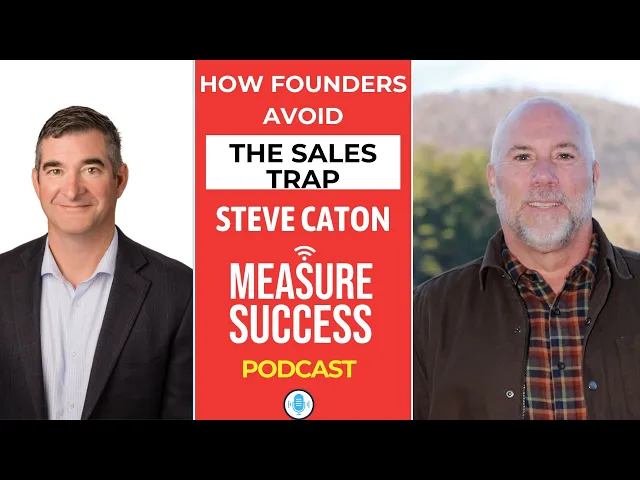
How To Scale Sales: Avoid Mistakes
This episode is sponsored by Altezza Solutions, liberating entrepreneurs through fractional sales execution. Today, Steve helps growth-stage companies break through revenue barriers while giving founders the freedom to focus on building extraordinary businesses.

Words by
Carl J. Cox
How Founders Escape the Sales Trap and Build Predictable Growth
Many founders start their businesses the same way.
They sell.
They pitch early customers.
They close the first deals.
They know the product better than anyone.
That approach works—until it doesn’t.
In this episode of the Measure Success Podcast, Carl Cox sits down with Steve Caton, Founder and CEO of Altezza Solutions, to discuss why sales becomes the most common growth barrier in founder-led companies.
This conversation is not about motivation or hustle.
It is about structure.
The Hidden Cost of Founder-Led Sales
In the early stages, founders are often the best salesperson the company has.
They understand the customer pain.
They know how to adapt messaging.
They can close deals through relationships.
Over time, that same strength becomes a limitation.
As the business grows, founders must:
Lead teams
Manage operations
Plan strategy
Prepare for scale
When sales still depends on the owner, everything else slows down.
Steve explains that many founders know they need to step out of sales, but they do not know how. That uncertainty creates hesitation. As a result, they stay stuck longer than they should.
Why Hiring Salespeople Often Fails
Many companies try to solve the problem by hiring salespeople.
The results are often disappointing.
Founders hire inexperienced reps they can afford.
Those reps struggle without systems.
Leaders lose patience.
The cycle repeats.
The issue is rarely effort or intent.
The issue is that salespeople are placed into an environment without:
Clear ideal client definitions
Strong messaging
Defined sales processes
Playbooks and expectations
Without those elements, even good salespeople fail.
Sales talent cannot fix missing infrastructure.
Sales Is a System, Not a Person
Steve introduces the idea of a sales operating system.
This includes:
Clear ideal client profiles
Messaging that creates signal instead of noise
Defined sales stages
CRM workflows
Measurable conversion points
When these pieces are missing, founders rely on gut instinct instead of data.
That leads to poor decisions, premature firings, and frustration.
When systems exist, leaders can see progress before revenue hits.
Marketing, Leads, and Sales Are Not the Same
A major theme of the episode is the confusion between marketing and sales.
Salespeople close deals.
They do not create demand.
When companies expect salespeople to generate leads, performance drops. Modern B2B buyers do not respond to pressure or cold outreach the same way they once did.
Steve explains the importance of:
Marketing-qualified leads
Sales-qualified conversations
Understanding conversion ratios
When leaders understand these metrics, they can predict outcomes rather than guess.
Why Fractional Sales Works
Instead of hiring expensive full-time sales staff too early, Steve explains why fractional sales models are growing.
Fractional sales allows companies to:
Access experienced sales leadership
Reduce overhead
Focus on closing activity
Build systems before scaling headcount
Many businesses only need 10–15 hours per week of true closing activity.
Paying for outcomes instead of idle time creates better return on investment.
Measuring Success Beyond Revenue
While revenue growth matters, Steve defines success differently.
Success includes:
Founders reclaiming their time
Leaders stepping back into strategy
Owners getting home for dinner
Businesses becoming sellable
One of the most powerful stories shared in the episode came from a client’s spouse, who thanked the sales leader for giving her husband his evenings back.
That is the real outcome of systems-driven growth.
Leadership Habits That Support Long-Term Performance
Steve also shares the habits that support his own leadership.
His routine includes:
Time in scripture and reflection
Regular exercise
Limiting technology early in the day
Protecting relationships
These habits support clarity, focus, and consistency.
Final Takeaway
If your business slows down when you step away, sales may not be broken.
It may be dependent.
This episode challenges founders to rethink how growth happens and why systems matter more than effort.
🎧 Listen to the full episode of the Measure Success Podcast and start measuring success with clarity.


