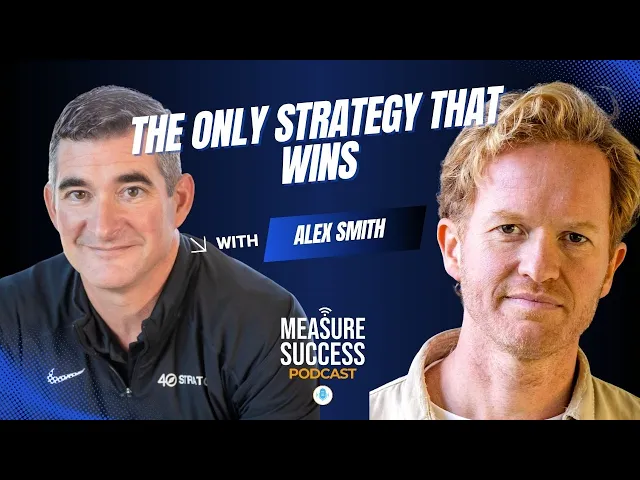
How to Win Without Being the Biggest
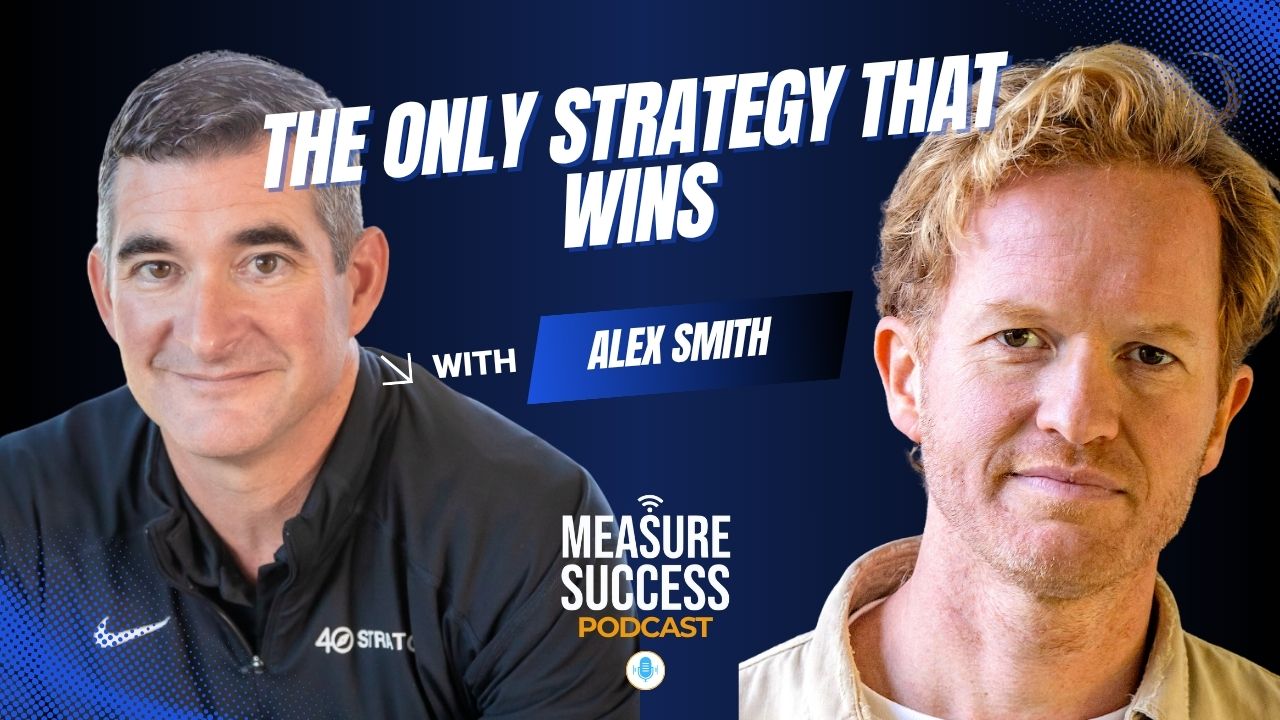
Alex Smith shares why being different beats being best. Learn practical business strategy tips on the Measure Success Podcast. Listen now.

Words by
Carl J. Cox
Most business owners ask the wrong question. They ask, “How do I become better than my competitors?” That sounds smart, but according to Alex Smith, it often leads companies into a trap. In this episode of the Measure Success Podcast, Alex explains why trying to be the best can create sameness, while being different can create real growth. Alex is the founder of Basic Arts and author of No Bullsht Strategy*. He helps founders and CEOs cut through noise and build clear strategies that work in real markets.
Alex Smith’s Unusual Path to Strategy
Alex Smith, author of No Bullsh*t Strategy, did not begin as a traditional strategy expert. He openly shared that he struggled early in the corporate world and was fired from two jobs before finding his path. That failure became part of his growth story.
Later, while working with clients, he noticed something important. Some businesses were effective, focused, and growing. Others were messy and unclear. That pushed him to study what separated successful companies from average ones.
He built his own ideas first, then discovered many aligned with classic strategy thinking. That moment helped him realize a major truth: many business owners need strategy, but they need it explained in simple language.
Only Is Better Than Best
One of the strongest lessons from this episode was Alex’s phrase:
Only is better than best.
Many companies try to beat competitors by offering better service, lower prices, faster delivery, or more features. The problem is competitors can often copy those moves.
When everyone competes the same way, products begin to look alike. Prices drop. Margins shrink. Customers choose based on convenience or brand recognition.
Instead, Alex encourages leaders to ask:
What can we become the only one known for?
That question changes everything.
Why Differentiation Matters
If your company offers something customers cannot get elsewhere, competition becomes less direct. You stop fighting for scraps in crowded markets.
Examples include:
A CPA firm known for clear communication with business owners
A marketing agency focused only on law firms
A contractor with guaranteed project timelines
A software company built for one niche industry
A coach who combines strategy with financial accountability
Customers often pay more for clarity and fit than for generic “better service.”
Strategy Requires Trade-Offs
Another major insight from Alex was that real strategy requires sacrifice.
Many companies want to keep every option open. They want to serve everyone, offer every service, and copy every trend.
That usually creates confusion.
Strong strategy means saying no. It means choosing what you will not do so you can become stronger in what you will do.
Examples:
A firm may reject low-budget clients
A company may narrow its service list
A brand may choose speed over customization
A consultant may reject corporate polish for honest direct advice
These choices help customers understand what you stand for.
Your Business Personality Matters
Carl and Alex discussed something many leaders overlook: the owner often is the differentiator.
Your voice, values, style, story, and energy matter.
Some business owners hide behind generic branding. They try to sound like giant corporations. That often weakens trust.
People buy from real people.
If you are practical, be practical. If you are direct, be direct. If you are relational, lead with relationships. If you are analytical, show insight.
Authenticity is not a slogan. It can be a strategic asset.
Why Small Businesses Have Opportunity
Large companies have resources, budgets, and systems. Small businesses often cannot win by scale.
But small businesses can win through:
Faster decisions
Better relationships
Specialized focus
Local trust
Flexibility
Founder visibility
Personal service
That is where many hidden advantages live.
Execution Still Wins
A strategy on paper means little without action. Alex shared that teams must understand the strategy deeply enough to explain it clearly. If employees cannot describe what makes the company different, execution becomes weak.
Winning teams know:
Who they serve
What they solve
Why they matter
How they are different
What choices support the mission
Clarity drives consistency.
A Powerful Habit for Leaders
Near the end of the episode, Alex shared one personal habit that helps him perform well: silence and boredom.
He explained that constant noise, podcasts, scrolling, and nonstop input can hurt creativity. Quiet moments help leaders think better.
That is practical advice for modern leaders.
Sometimes your next breakthrough needs space, not more content.
Questions to Ask About Your Business
Use this episode as a strategy workshop. Ask yourself:
What makes us different?
Are we competing on price or purpose?
What do we do better because we do less?
Who are we best built to serve?
What should we stop doing?
Can our team explain our value clearly?
Final Thought
Many businesses work hard but blend in.
Growth often begins when leaders stop asking how to be better and start asking how to be different.
That shift can improve margins, messaging, culture, and momentum.
Listen to this full episode of the Measure Success Podcast with Alex Smith and start building a business customers remember.


