Your Business Is Always on the Clock
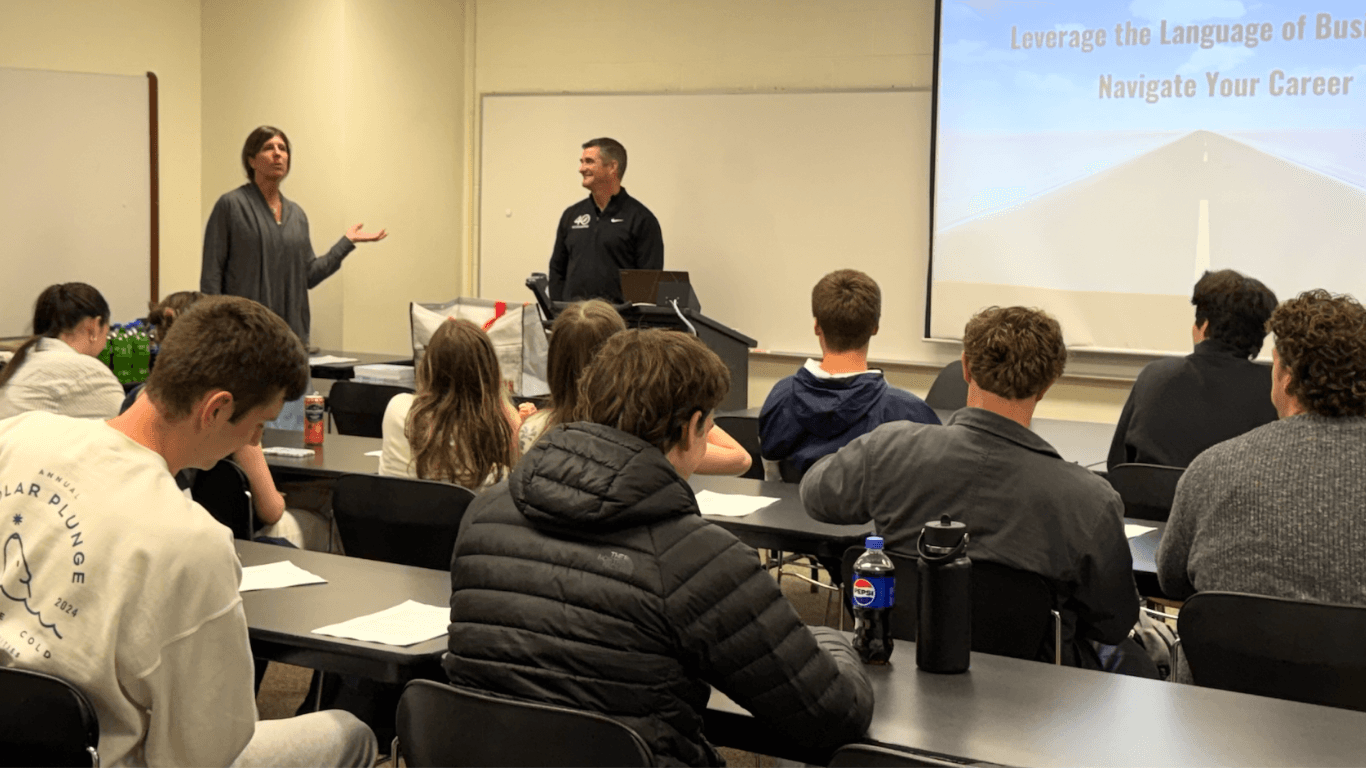
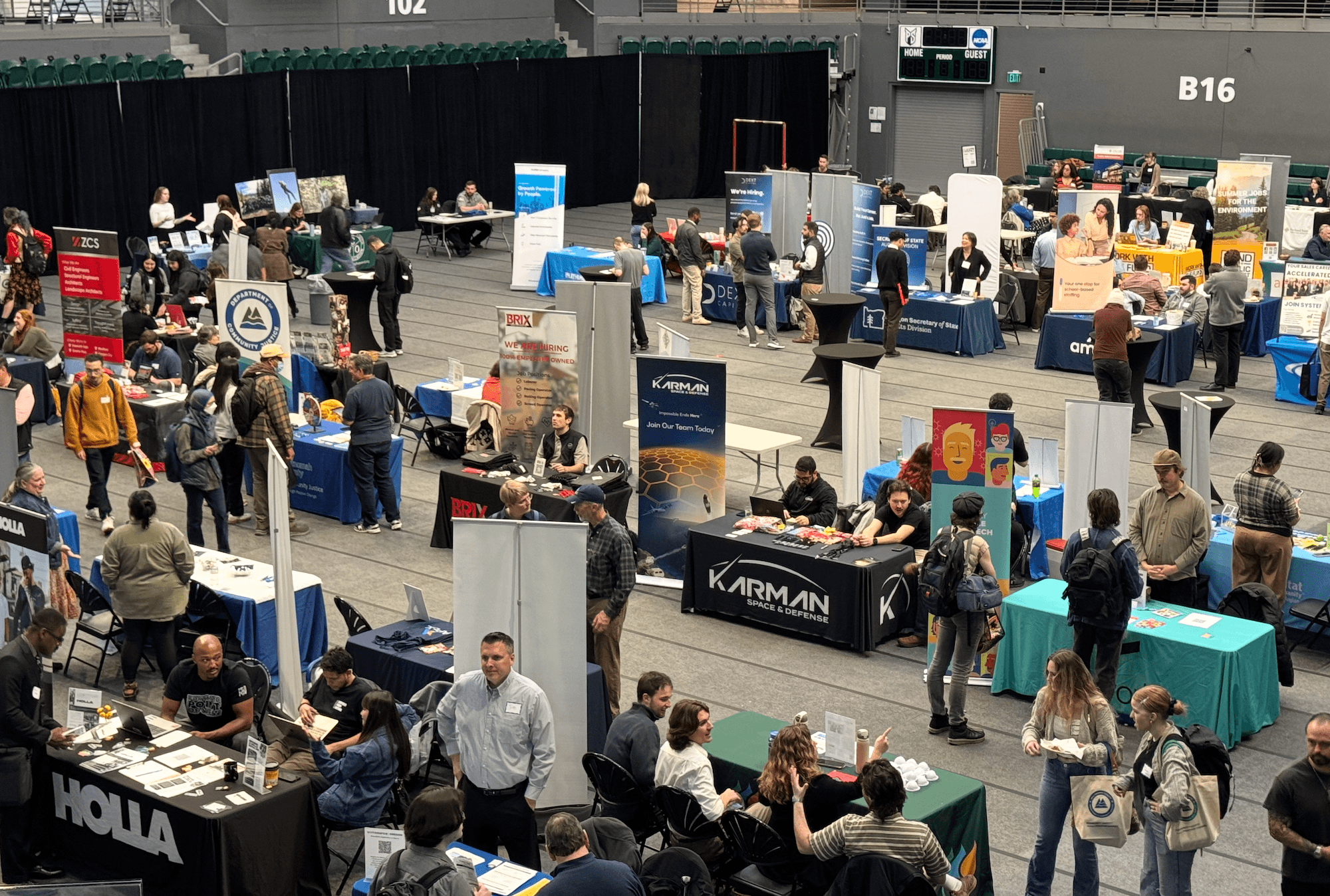
This past week, I spoke at George Fox University https://www.georgefox.edu/ about the opportunities that lie ahead with an accounting degree and hosted a booth at a job fair at Portland State University. https://www.pdx.edu/ I loved talking with a couple dozen students about their future career.
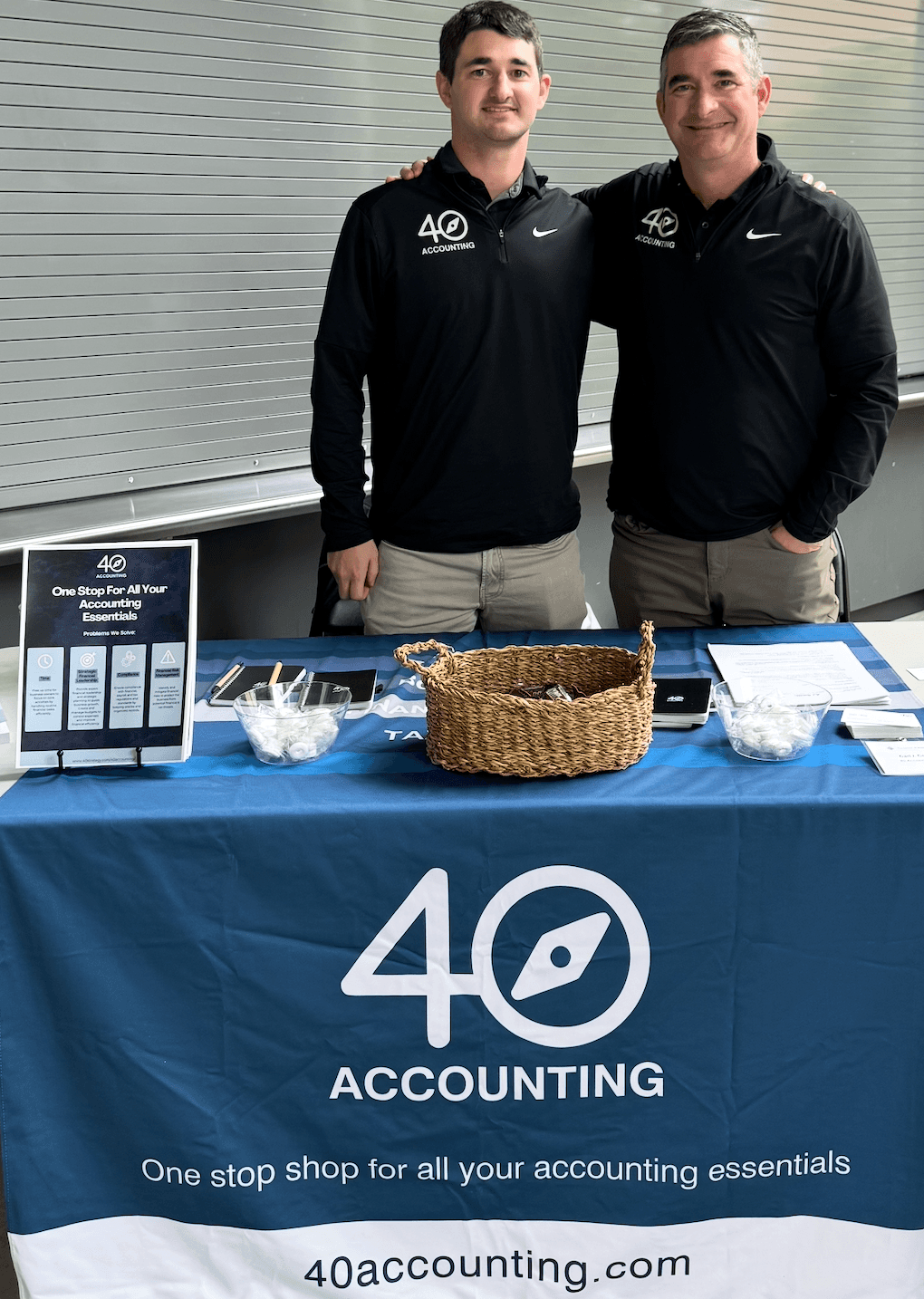
We’re looking for a few great students who could be a fit for 40 Accounting™ https://www.40strategy.com/product/40-accounting down the road.
Coincidentally, it’s also NFL Draft week.
I’ve always loved the draft.
There’s something exciting about it, new talent, new hope, a chance to get better. Every team is trying to win. And in the NFL, there are constraints: a 53-man roster and a salary cap.
Sound familiar?
Every business has the same problem.
You don’t get unlimited people. You don’t get an unlimited budget. And every decision matters.
Everyone wants the #1 pick. But it comes with a cost.
And every year, someone in the later rounds gets overlooked and turns into a star.
After the draft, none of that matters.
What matters is what happens next.
Do they put in the work?
Do they fit the system?
Do they elevate the team?
Because here’s the truth…
A great player in the wrong system struggles.
An average player in the right system thrives.
I see this all the time in business.
Companies aren’t just trying to grow, they’re trying to get better.
The question is:
Are you building your team intentionally… or just filling seats?
You’re operating with your own version of a 53-man roster.
You have limits.
You have trade-offs.
And every hire or non-hire impacts your future.
Sometimes your first-round pick doesn’t work out.
And sometimes… you find a seventh-rounder who changes everything.
(Yes, they exist in business too.)
At the end of the day, it’s not about resumes.
It’s about performance.
How they show up.
How they treat clients.
How they work with the team.
How they help you sell, deliver, and retain business.
And here’s the hard part…
When new talent comes in, sometimes someone else has to go.
That’s where most companies get stuck.
Loyalty. History. Comfort.
They helped you get here.
But the real question is:
Can they help you get where you’re going next?
Five Draft-Day Rules for Your Business
Don’t draft if you don’t need to.
The best hire is often no hire. Can your current team step up? Can systems or technology close the gap?Get specific about the role.
“Salesperson” means nothing.
Do you need a hunter? A farmer? A relationship manager? Define success and the tasks clearly.Look for proof, not potential alone.
Past success isn’t everything—but it matters. Patterns tell a story.Protect your culture.
Talent without alignment is expensive. One wrong hire can drag down the entire team.Build in a trial period.
In the NFL, getting drafted doesn’t guarantee a roster spot.
Your business shouldn’t be any different. Measure performance early and often.
And if I were to add one more…
Test for skill, not just interviews.
-The NFL measures speed, strength, and execution.
You should too. Give candidates real-world scenarios. See how they perform.
Because here’s the reality:
Bad hires are expensive.
Studies suggest up to 74% of companies have made a bad hire, with costs reaching as high as $240,000 when you factor in lost productivity, rehiring, and disruption.
That’s not just a people problem.
That’s a strategy problem.
As the draft wraps up, every team feels optimistic.
But only a few actually get better.
The difference?
They don’t just draft talent.
They build the right team.
Make sure you’re doing the same.
—Carl
The Best Talent Is Not Always the First Pick
I am writing this on my way to a local university job fair event. We were looking for some great young students who could perhaps be a great fit for 40 Accounting™ in the future.
Coincidentally it also fell on the NFL draft day, which will be wrapping up by the time this blog is released.
I’ve always found the draft to be a very exciting day. There’s something about the concept of getting new talent to help your team win in the future. There’s something that seems somewhat fair. The thing about the NFL and that each team is limited to 53 players and there is a salary cap.
Everyone wants to have the number one draft pick but there’s also a cost that is attached to that number. Of course in the late rounds, people are hoping to draft somebody who was overlooked because they weren’t from the biggest school, they didn’t have the fastest time, or perhaps they didn’t do well in some of the interviews.
But after the draft, none of that matters.
What matters is that these new players are willing to put in the blood, sweat, and tears of what it takes to make a difference for your new organization. Are they willing? Do they fit properly with the team values? Do they have the skills?
There are teams in the NFL that run different types of offensive or defensive schemes. A great player for one system might not be a great player for another system.
That also applies to the coaching philosophy. If a player doesn’t fit well with a certain coach he might not flourish, but you can go to another team and all of a sudden he becomes a NFL pro.
I find it in the real world that this is true as well. Great companies are trying to get better.
The question is, are they focused on bringing in the right talent? Are they focused on looking at their existing talent?
See, the inherited problem of a 53 man roster is there is a limit to your budget, which is definitely true with all of the small companies that we work with. You can’t hire whoever you want at the highest price, you have budget limitations.
So when the first round pick doesn’t work out. When you happen to find that seventh round pick, like a Tom Brady, and then they all of a sudden become one of the greatest players ever. These people exist in the real world.
At the end of the day, it’s not your height. It’s not your weight. It’s not how you look. It’s how you perform. It is how you treat your clients and how you interact with other employees. It’s how you actually help the company sell your product and services. How you deliver them. Then how you follow up with great customer care.
The other part of the problem with the draft is some people on your existing team might have to go. You have a limit of how many people you have there.
This, of course, is one of the greatest challenges that most companies have. They are unwilling to make a change, and this could be for many reasons. They could be a part of their family, that they been with you since the early growth years, or been a huge contributor to get you to where you needed to be at today.
But the real question is, are they gonna help you go to where you need to go next?

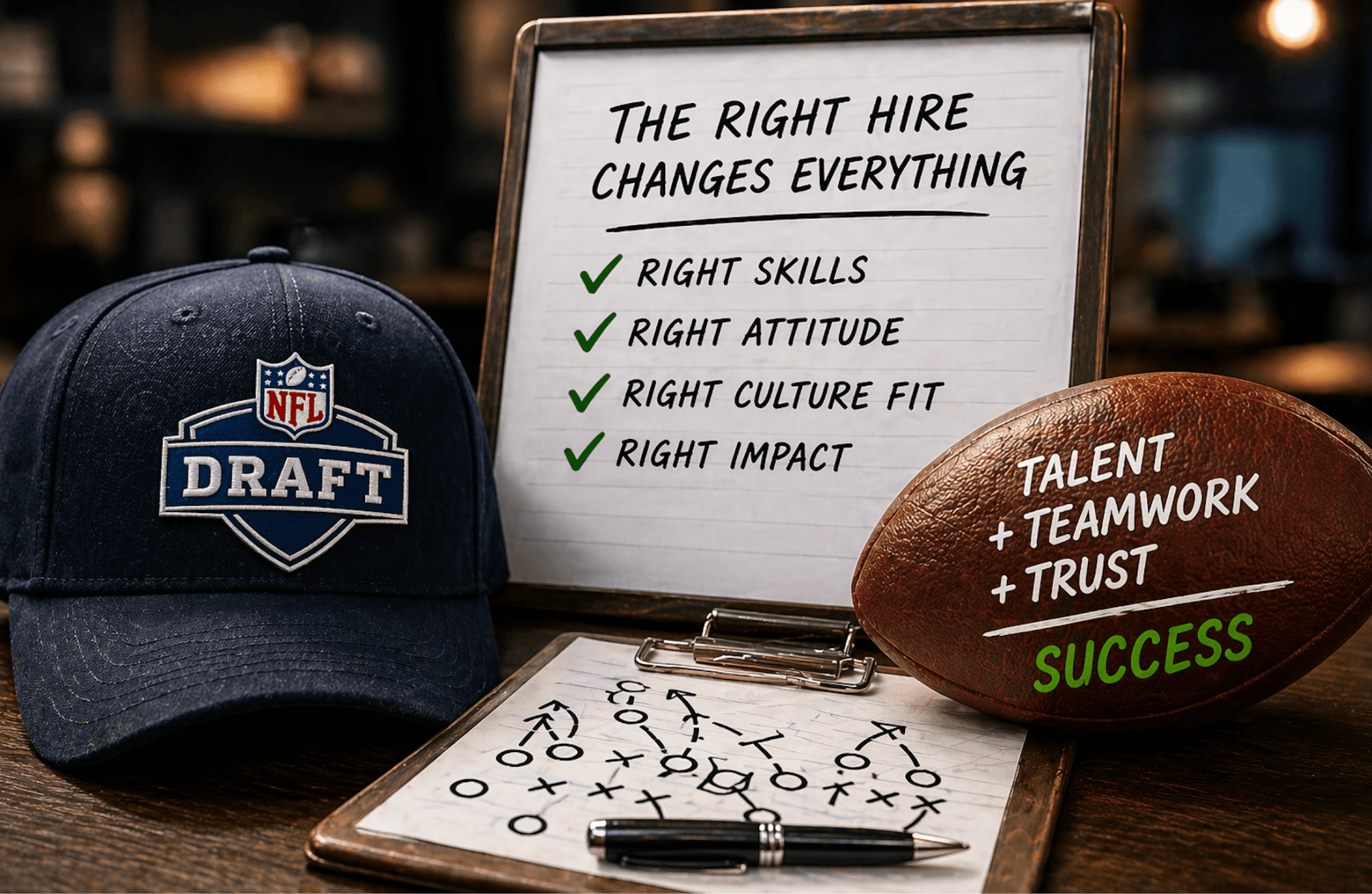
Here are five things to consider when you are going through your next draft:
Make sure you actually need to draft. The best way to see if you get all things is actually not hiring at all. Can your existing team members get things done? If your existing team members can’t get to them, or you can’t make it more efficient through technology, etc., then you should move forward hiring.
Clarify the job tasks and skills that are needed. You could say I’m hiring a sales person, but that could mean wildly different things to two different people. Are you looking for a Hunter? Are you looking for a Farmer? Or are you looking for somebody who is going to just be answering the phones?
Check to see if they’ve actually done it successfully before. Of course, past success is not a guarantee of future success, but they generally have positive correlation.
Make sure you are clear what your culture is like and to make sure that they are going to be a great fit in your culture. You can have the greatest athlete in the world, but if they are a complete jerk and nobody wants to pass the ball, they will be a cancer to your team, not a team.
Have a trial period. One of the most misunderstood things about the NFL draft is people get drafted and they will get signed contracts, but it doesn’t mean they make the 53 man roster. They can get cut. I encourage you to have a trial type period built into your contracts. Reality is we will make mistakes despite all our efforts. We are expecting them to perform, we need to measure success so it is much easier to part ways early. We often fire too late because we fell in love with them and they actually aren’t performing.
“Recent studies show that 74% of companies have made a bad hire, and in extreme cases, the cost can reach up to $240,000 when factoring in lost productivity, rehiring expenses, and disruption to team dynamics. Harvard Business School Review found that 80% of employee turnover stems from poor hiring decisions, revealing a major but avoidable business risk.” 2025, LinkedIn https://www.linkedin.com/pulse/real-cost-bad-hire-how-avoid-2025-hallmark-global-solutions-dflfc/
If I were to add a six, find a way to measure their skills. You know what they do in the NFL, they time their sprints, measure their jumps, and if they’re a quarterback, how far they can throw the ball. These are important characteristics. Of course, there are no guarantees for success. But there are skills like that in your work that you can actually test and validate. They will give you a better idea of whether or not they will be capable of doing the things that you need them to do.
Well, I hope your team has good luck in the NFL draft. And more importantly, I hope your company is making the right decisions to help your team be more successful in the future.