Strategy for Saturday: Ready to Be CEO?

Most business owners spend years building the skills needed to run a business.
Far fewer spend time preparing to lead one.
There is a big difference.
Recently, I was asked by a small business, can you evaluate whether or not our key operator is ready to become the CEO? The candidate recently flew out to our offices for a full-day discussion, assessment, and strategy session.
"What does it take to become a successful CEO?"
At first glance, the answer seems obvious. Work hard. Gain experience. Learn the industry.
But after working with hundreds of business owners over the last three decades, I've found that the transition into true CEO leadership is less about what you know and more about how you think.
The question is not:
"Can you do the work?"
The question is:
"Can you lead others to do the work?"
The Biggest Shift: From Operator to Leader
Many business owners reach a point where they are responsible for sales, operations, finance, customer service, and problem-solving.
In other words, they have become one of the most capable employees in the company.
The challenge is that the CEO role requires a completely different skill set.
The CEO is no longer responsible for doing the work.
The CEO is responsible for building the environment where great work happens.
That requires vision, communication, accountability, and trust.
Unfortunately, trust is becoming harder to earn. Gallup recently reported that only 21% of employees strongly agree that they trust the leadership of their organization. Even more concerning, employee engagement remains stuck at approximately 32% across the United States workforce. When trust declines, performance typically follows.
As a CEO, your first responsibility is creating clarity.
People cannot execute a strategy they do not understand.
Your First 90 Days Matter
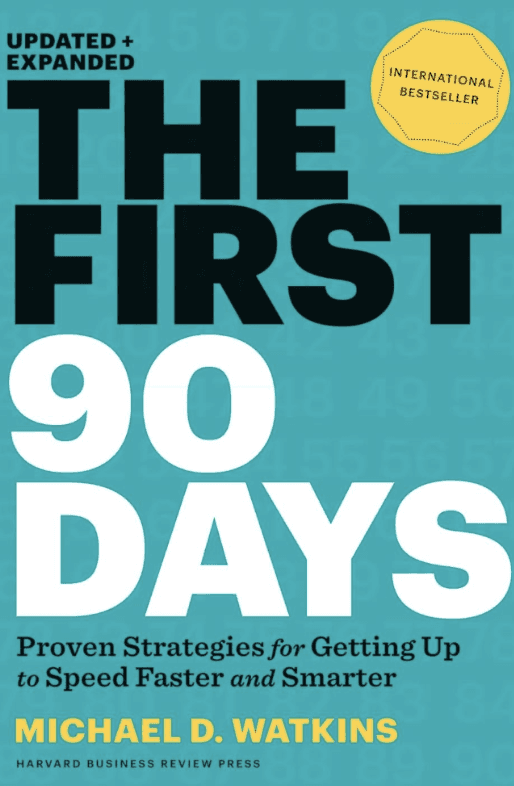
Whether you are stepping into a CEO role for the first time or taking over leadership of an existing company, The First 90 Days are critical.
Most leaders make one of two mistakes:
They try to change everything.
They change nothing.
Neither works.
Instead, focus on four priorities:
Build trust with your team.
Listen before making major changes.
Establish clear expectations.
Create measurable goals.
Quick wins matter.
People do not expect perfection. They expect direction.
The best CEOs spend their first 90 days learning the business, strengthening relationships, and creating momentum.
Embrace Servant Leadership
One of my favorite leadership concepts comes from Jim Collins' book, Good to Great.
The most effective leaders are often the most humble.
They see leadership as service, not status.
Servant leadership is not soft leadership. In fact, it often requires making the toughest decisions.
It means putting the needs of the organization ahead of your own comfort.
Sometimes that means changing processes.
Sometimes it means changing people.
Research has consistently shown a relationship between servant leadership, stronger employee engagement, and improved organizational performance. One study in the National Library of Medicine found servant-led organizations significantly outperformed their peers in long-term returns.
The best CEOs ask:
"What does the company need from me right now?"
Not:
"What do I want?"
Read More Than You Talk
One common characteristic I see among successful CEOs is curiosity.
They are learners.
They read.
They ask questions.
They seek mentors.
The moment a leader believes they have all the answers is usually the moment growth begins to slow.
I often tell business owners that every company eventually becomes a reflection of its leadership team.
If the leadership team is learning, growing, and improving, the organization usually follows.
If leadership becomes stagnant, the company often does too.
Think Beyond Today
Many leaders become trapped by the urgent.
Customer issues.
Cash flow.
Hiring.
Operations.
Those issues matter, but the CEO's real responsibility is to balance today's reality with tomorrow's opportunity.
Every CEO should be able to answer three questions:
Where are we going?
Why are we going there?
How will we know we are winning?
Without those answers, teams become busy but not necessarily productive.
A three-year vision creates alignment.
Quarterly goals create momentum.
Daily actions create results.
Final Thought
The CEO title is not a reward for hard work.
It is an acceptance of responsibility.
As CEO, you own the results.
You own the culture.
You own the direction.
And ultimately, you own the decisions.
The good news?
You do not need all the answers to become a great CEO.
You need the willingness to learn, the courage to make difficult decisions, and the humility to serve the people who depend on your leadership.
Because at the end of the day, successful CEOs do not build great companies.
They build great teams that build great companies.
Question for this week: What is one thing you need to stop doing as an operator so you can start thinking like a CEO?
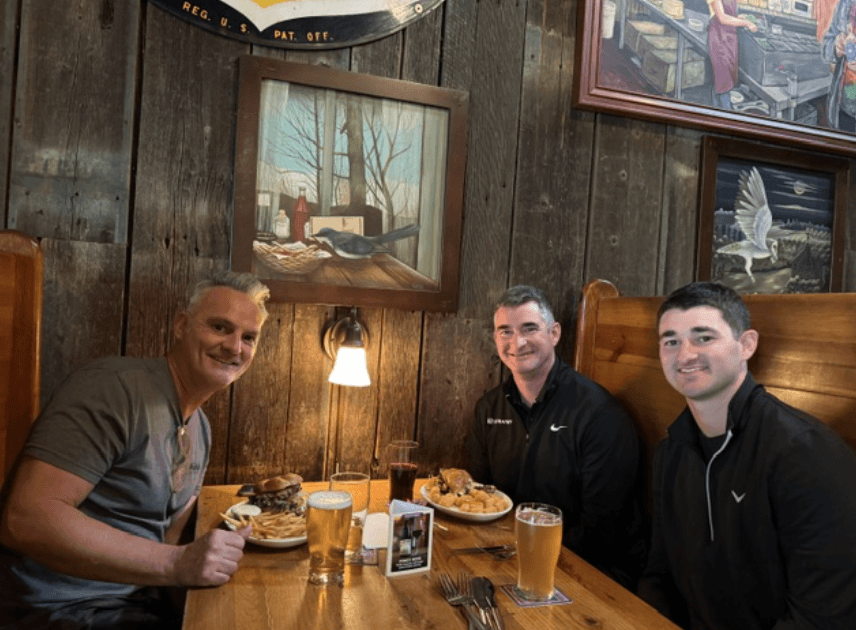
(Billy McFadden, Carl J Cox, & Zach Cox)
Another Visit By a Client
Some weeks are just better than others. We are actively onboarding our newest 40 Accounting team members and interviewing some local recent graduates for a summer intern position.
I also had a chance to catch up with Billy McFadden from Magma. It's always great to connect and plan for the future.


