Stop Hiding Behind Your Logo

(George Washington, aka, Carl, and Abe Lincoln, aka, Ben Heiney)
Welcome everybody to another Strategy for Saturday blog, I am Carl J. Cox, and we are driving strategy home for small businesses.
What an epic couple of weeks it has been.
We just wrapped up our seventh family reunion parade for the Fourth of July. I was out there in full George Washington gear, celebrating the upcoming 250th anniversary of the United States, carrying the flag, throwing candy, and getting the crowd fired up with “USA!” chants.
It was competitive. It was patriotic. It was flat-out fun. (And fortunately it was before the July 6th soccer game that will not be mentioned.)
And now, we are packing our bags and heading to Annapolis, Maryland. This weekend, my son, Tyler, is getting married to his beautiful bride, Sarah, yes, another Sarah to the family. We get to celebrate at the Naval Academy with family flying in from all over the country.
These are the moments that stop you in your tracks.
The parade. The wedding. The family stories. The hugs. The memories.
They remind us of something very simple and very powerful.
People connect with People.
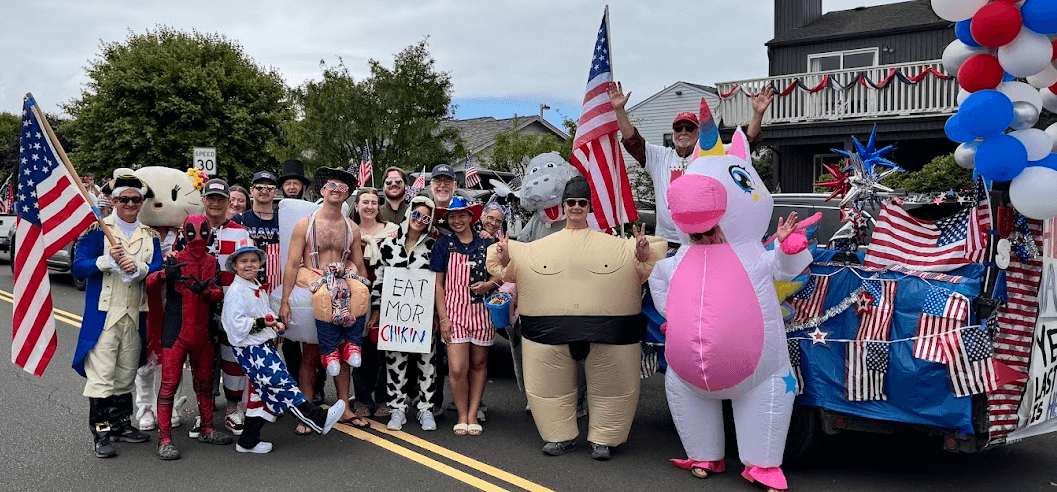
(Seaside, Oregon, Parade, July 4th, 2026, Heiney Family Reunion)
And that brings us to this week’s strategy, building your personal brand.
Hiding Behind the Logo
As a small business owner, it is easy to hide behind your company logo.
You post from the company page. You talk about the company mission. You show the company services. You hope the company brand does all the heavy lifting.
But here is the truth.
Your audience does not only want to know what your company does.
They want to know who is driving the ship.
Look at the big players. Love him or hate him, Trillionaire Elon Musk has shown the power of personal branding. Tesla became more than a car company, while SpaceX is more than an aerospace company. It became tied to a person, a vision, and a point of view.
Or look at Burger King’s recent campaign. U.S. and Canada president Tom Curtis gave out his personal phone number and invited customers to call or text him directly. Reports said Burger King leaders connected with thousands of customers, and the company later reported a 5.8% increase in U.S. same-store sales for the quarter. Was that all because of one campaign? Of course not. But it showed something important: people respond when leaders step out from behind the curtain.
You do not have to be a Fortune 500 CEO to do this.
In fact, for small businesses, it matters even more.
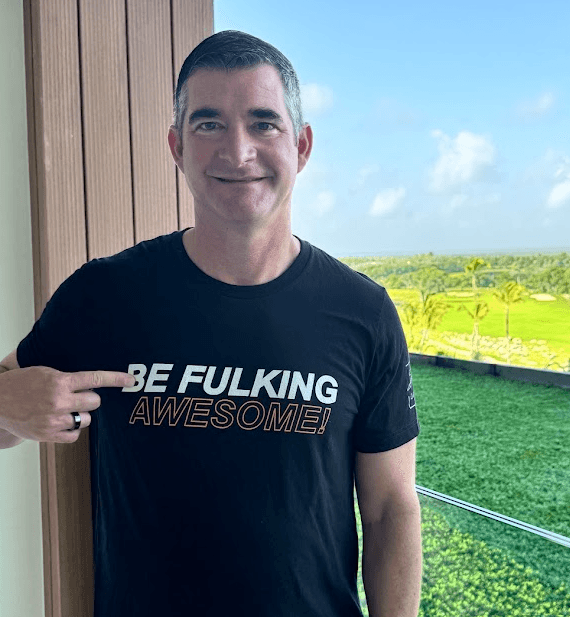
(The Dave Fulk Brand working in The Dominican Republic)
Marketing, Branding, and Reputation Are Not the Same Thing
I recently sat down with Dave Fulk on the Measure Success Podcast. Dave is the CEO of Reputation Rhino and the creator of the “Fulking Awesome” brand.
Dave made a great distinction that every business owner needs to understand.
Marketing is what you say about yourself.
It is your website. Your ads. Your social posts. It is walking into a room and saying, “I am Carl, and 40 Strategy is great.”
Branding is what other people say about you when you leave the room.
For example, it is someone else walking into that same room and saying, “You have to meet Carl. He knows how to help business owners develop a clear vision, design a strategic plan and execute it with you until it gets done. And he guarantees his work.”
Reputation is whether the market believes the promise.
That is the part many business owners miss.
If you are only posting polished updates from your company page, you may be doing marketing. But you are not necessarily building trust.
And trust is the whole game.
BrightLocal’s 2026 Local Consumer Review Survey found that 85% of consumers say positive reviews make them more likely to use a business, while 77% say negative reviews make them less likely to choose one. That means your reputation is not a soft asset. It is a revenue asset.
The One-Second Impression
We live in a world where people research you before they ever call you.
Google now sees more than 5 trillion searches per year. That is roughly 14 billion searches per day.
So when you meet a prospect, get a referral, speak at an event, or appear on a podcast, what happens next?
They search.
They look you up. They scan your LinkedIn. They check your reviews. They watch a video. They decide whether you feel credible before you ever get a chance to explain yourself.
And they decide fast.
Researchers Janine Willis and Alexander Todorov found that people can form trait judgments from a face after only one-tenth of a second. One-tenth of a second! That is faster than most of us can decide whether to hit snooze in the morning.
Now take that same idea into the digital world.
Your online presence is often your first impression.
If people search for you and find nothing, that says something.
If they find a clear message, real stories, helpful content, and proof that you know what you are doing, that says something too.
And now AI is changing the game again.
Tools like ChatGPT, Claude, Perplexity, and Google AI answers are pulling information together to tell the market who you are. If you are not creating clear, consistent, authentic content, AI will either find nothing or piece together a story you did not write.
That should get your attention.
The Trinity of Trust
Here is a simple way to think about it.
Before someone buys, they need to trust three things.
They need to trust the person.
They need to trust the company.
They need to trust the product.
All three matter.
If I walk into a car dealership and I trust the salesperson and I like the dealership, but they try to sell my family of six a two-seat sports car, I am not buying.
The product does not fit.
If I like the product but do not trust the salesperson, I hesitate.
If I trust the person but the company has terrible reviews, I pause.
For a small business, the owner is often the linchpin.
You are the bridge between the person, the company, and the product.
That means your personal brand is not vanity.
It is a strategy.
Your Mission: Build 200 Raving Fans
So what do you do?
You do not need to go viral.
Honestly, if you went viral tomorrow, could your business even handle it?
Most small businesses do not need millions of followers. They need 200 loyal, raving fans who trust them, refer them, review them, and come back again.
Start by sharing your why.
For me, my goal is to positively impact 10,000 business owners with the knowledge I have gained over 30 years of grinding, failing, learning, growing, and helping companies move forward.
What drives you?
Why did you start?
What problem are you trying to solve?
Who are you trying to help?
Next, be accessible.
Have real conversations. Answer questions. Show up in your community. Let people see the human being behind the business.
Finally, fix the inside first.
You cannot build a five-star reputation on a broken product or a toxic culture.
Put your team first. Train your people so well they could leave, and treat them so well they do not want to. When your team feels valued, they take better care of your clients. When your clients feel valued, they tell others.
That is how reputation compounds.
So here is your challenge this week.
Step out from behind the logo.
Let people know who you are, what you believe, and why your work matters.
Because people do not just buy from companies.
People buy from people.
Keep crushing it.
Carl J. Cox
Driving Strategy Home for Small Businesses